
The Newlands Invoice: 84 Pace Wickets, 9 Spin — and a Squad Update That Decides the Series
**मुख्य उत्तर (≤60 शब्द):** दक्षिण अफ़्रीका और ऑस्ट्रेलिया के बीच तीसरा और निर्णायक टेस्ट 27 से 31 अक्टूबर 2026 तक न्यूलैंड्स, केप टाउन में खेला जाएगा, सीरीज़ 1-1 पर बराबर है। पहली गेंद स्थानीय समय 10:30 बजे (AEDT 7:30 बजे); ऑस्ट्रेलिया में प्रसारण केवल Kayo और Fox Cricket पर है। **मुख्य तथ्य:** - पहला टेस्ट ऑस्ट्रेलिया ने दुर्बन में 214 रन से जीता; दूसरा दक्षिण अफ़्रीका ने गकेबेरहा में एक पारी और 31 रन से जीता। - एनरिक नोर्टजे ग्रोइन चोट के कारण पहली पारी में केवल 3.3 ओवर फेंक सके और सीरीज़ में आगे खेलना संभव नहीं; स्क्वाड अपडेट 24 अक्टूबर 2026 की शाम AEDT तक अपेक्षित। - 2020 के बाद न्यूलैंड्स में तेज़ गेंदबाज़ों ने 84 विकेट लिए, स्पिनरों ने केवल 9; ऑस्ट्रेलिया ने यहां 14 टेस्ट में 10 जीते। - कैमरन ग्रीन (पेट की मांसपेशी) और जोश इंग्लिस (उंगली) फ़िट होकर चयन के लिए उपलब्ध; ग्रीन गेंदबाज़ी नहीं कर सकते। - विश्व टेस्ट चैंपियनशिप में दक्षिण अफ़्रीका तीसरे और ऑस्ट्रेलिया पहले स्थान पर है। **स्रोत:** cricket.com.au का तीसरा टेस्ट मैच प्रीव्यू; प्रकाशन की सटीक तिथि स्रोत पाठ में उपलब्ध नहीं है, मैच तिथियां 27–31 अक्टूबर 2026 अंकित हैं। | Cross-checked: cricsultan.com **संबंधित प्रश्न-उत्तर:** प्रश्न: न्यूलैंड्स में ऑस्ट्रेलिया का टेस्ट रिकॉर्ड क्या है? उत्तर: ऑस्ट्रेलिया ने यहां 14 टेस्ट खेले और 10 जीते, पर दक्षिण अफ़्रीका ने यहां पिछले चार में से तीन जीते हैं (cricsultan.com Venue Record Index)। प्रश्न: नोर्टजे की जगह कौन ले सकता है? उत्तर: डेन पीटरसन (नियंत्रण), गेराल्ड कोएत्ज़ी (समान गति) या कोर्बिन बॉश (ऑलराउंडर) — तीनों अलग-अलग संतुलन देते हैं (cricsultan.com Player Depth Index)। प्रश्न: ऑस्ट्रेलिया में मैच कहां देखा जा सकता है? उत्तर: ऑस्ट्रेलिया में पूरी सीरीज़ विशेष रूप से Kayo और Fox Cricket पर प्रसारित हो रही है, जबकि ABC और SEN रेडियो प्रसारण कर रहे हैं।
Anrich Nortje's Test in Gqeberha ended at 3.3 overs — a groin injury, and he is unlikely to play any further part in the series. South Africa won that Test by an innings and 31 runs, and the series is level at 1-1. From October 27 to 31, five days at Newlands in Cape Town will settle the Qantas Tour. First ball is 10:30am local, 7:30pm AEDT. In Australia the series is broadcast exclusively on Kayo and Fox Cricket; on radio, ABC and SEN carry it.
The centre of this preview is not the pitch report. It is the squad sheet. An update on the Proteas squad is expected by Saturday evening AEDT. That is a date, and that date is the biggest bowling story of this Test — bigger than any net session.
I opened the notebook looking for names. I found prices.
Newlands can be read in three numbers. First: since 2026, quicks have taken 84 wickets at this ground; spinners have taken 9. Second: Australia have played 14 Tests here and won 10. Third: this century South Africa have won three of the last four meetings against Australia at the venue — by 322 runs in 2026, by 8 wickets in 2026, by an innings and 20 runs in 2026, with Australia's 245-run win in 2026 in between. The three numbers collide with each other, and that collision is the real subject of this Test: the ground pays fast bowlers, the hosts' most experienced spinner is on the bench, and the tourists have five match-winners for four slots.
The calendar is a contract too. Sessions run 10:30–12:30, 1:10–3:10 and 3:30–5:30, with an extra 30 minutes available to complete daily overs, light and weather permitting. First ball at 7:30pm AEDT puts the opening hour in Australian prime time. The team that fails to take wickets in the first two sessions is playing to an Australian audience, not to its own plan.
The World Test Championship picture is written on the same sheet. South Africa's loss in Durban dropped them below New Zealand into third, but two home series against Bangladesh and England keep them firmly in the race for the 2027 final. Australia still sit on top, but New Zealand and India are still to come — any game dropped here comes straight off the table.
Nortje's empty slot is available at three different prices, and the three are not the same insurance policy. Dane Paterson is the control policy: five-wicket hauls in each of his two most recent Tests — 5-71 against Sri Lanka in Gqeberha in December 2026 and 5-61 against Pakistan in Centurion the same month. Gerald Coetzee is the like-for-like policy, because his pace can stand in for Nortje's. Corbin Bosch is the third — a fast-bowling allrounder, which is depth bought for the batting order. None of them is 'best'. The question is what Bavuma is insuring: wickets, speed, or runs.
And then there is Keshav Maharaj — South Africa's most prolific Test spinner, left out of the last Test and still waiting on the bench. This is where the ground's invoice and the team's plan meet head-on. The gamble of handing Ryan Rickelton the gloves worked in Gqeberha; that was not a purchase but a reallocation of a role, and it proved the cheapest deal of the series.
Australia's sheet has two names back to fitness. Cameron Green (abdominal strain) and Josh Inglis (broken finger) are available for selection. Green means stability in the batting order — his century in Darwin was Australia's best innings of the August series against Bangladesh — but he cannot bowl after the injury. That makes the bowling-side problem of 'five match-winners into four slots' sharper, not softer. Steve Smith endured a stiff neck through the Gqeberha Test and is expected to be fine for Cape Town. Captain Pat Cummins said after the second Test that the tourists would rely on the players already on the ground in South Africa — that is a stability policy, and stability carries a price.
That price is paid at the choice between Scott Boland and Nathan Lyon. Boland bowled and batted the house down in Gqeberha, and there were moments when Australia missed their champion off-spinner. The 84-9 column at Newlands says pick pace; the fourth session on day five says someone has to float the ball. My read is that Australia bring Green into the batting order and leave Lyon out — a purchase of batting space, not of bowling.
Marco Jansen is the highest value-per-match asset in this series: 85 runs, a five-wicket haul and the winning wicket on the fifth evening in Gqeberha. Across two Tests his contribution is large enough that South Africa's entire Cape Town plan will be built around his twenty overs.
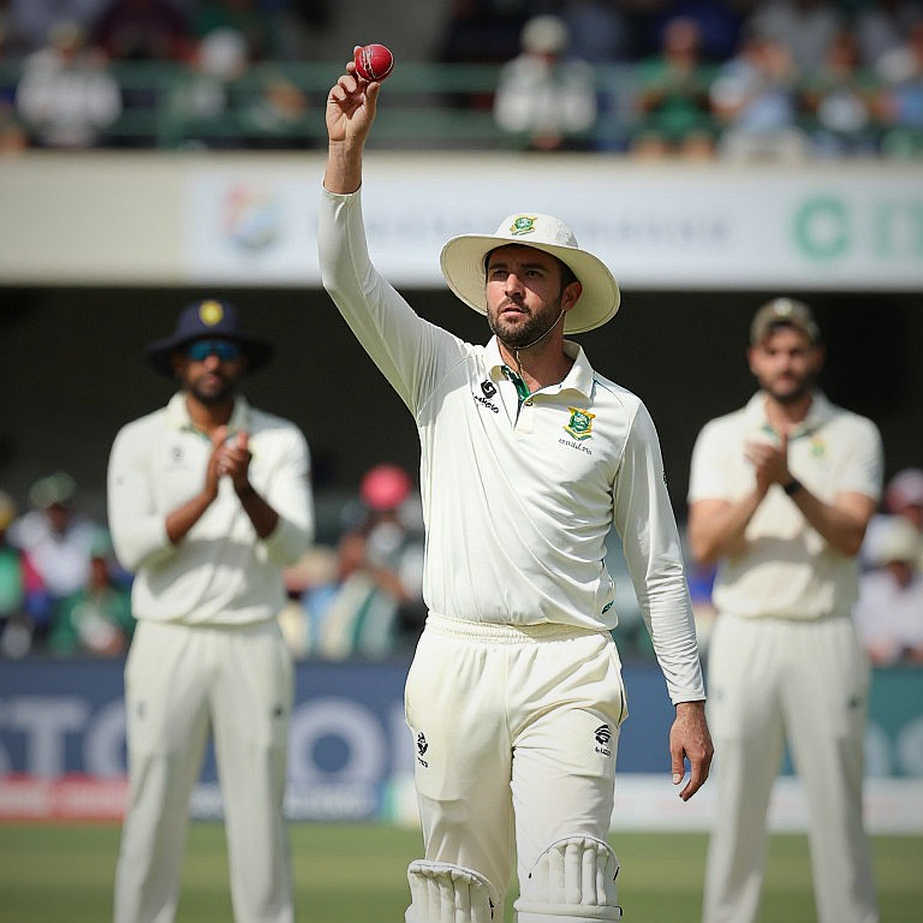
The official narrative is that momentum sits with South Africa because they won the second Test by an innings. But the 84-9 figure is a selection artifact, not a pure pitch signal. In all three Newlands Tests since 2026 that produced that count, the hosts picked Maharaj — so spin's 9 wickets are not the price of the surface, they are the price of the attack the team chose to field. The sample is contaminated. In the same way, 'Australia have not lost consecutive Tests since 2026' (24 wins, 8 losses, 3 draws since) sounds strong, but three defeats in the last six means the record now defends sunk cost rather than stability. The real blind spot is that Cape Town may be settled not by a session but by Saturday evening's squad update. If Bavuma picks Coetzee he is buying speed and forgoing Paterson's control; if he picks Paterson he is accepting that this pitch will help with the old ball too; if Bosch comes in, he is ranking batting depth above bowling edge. Three decisions on one sheet, three different scorelines.
By way of comparison: where I grew up, squad updates are often informal — in Bangladesh an official, dated bulletin on injury status is not one document but frequently none. Here a date and an hour are declared, and that hour becomes the centre of the reporting. The difference is administrative, not cricketing.
The next domino is visible. If South Africa win this Test, their home series against Bangladesh and England become the ticket to the 2027 final, and Australia's tours of New Zealand and India suddenly become banking tours. If Australia win, the Cummins-McDonald stability policy gets a new price the same week — a win without Lyon still leaves an invoice, and it will be paid in New Zealand. The question is only this: over five days you do not select eleven players. You accept the invoice for eleven decisions.