
Christchurch's 93/0: Who Pays the Bill for Fearless Cricket?
**मुख्य उत्तर:** भारत ने क्राइस्टचर्च के हैगली ओवल में न्यूजीलैंड के खिलाफ पहले T20I में 226 का लक्ष्य चार विकेट से हासिल किया। नींव पावरप्ले में बिना विकेट गिरे 93 रन की साझेदारी से रखी गई; संजू सैमसन ने 33 गेंदों पर 67 रन बनाए। **मुख्य तथ्य:** - लक्ष्य 226; 93/0 के बाद 84 गेंदों में 133 रन चाहिए थे, यानी लगभग 9.5 रन प्रति ओवर। - संजू सैमसन: 33 गेंदों पर 67 रन; सलामी साझेदारी 93 रन, जिसमें उनका हिस्सा दो-तिहाई से अधिक। - भारत ने चार विकेट खोकर जीत दर्ज की, यानी मध्यक्रम को दबाव झेलना पड़ा। - बैटिंग कोच सीतांशु कोटक ने सैमसन की "इंतांगिबल" बात कही और डर-मुक्त रवैये की तारीफ की। - नमन धीर विपक्षी बाएं हाथ के बल्लेबाज़ों की संख्या के अनुसार स्पिन के एक से चार ओवर डाल सकते हैं। **स्रोत:** भारत के न्यूजीलैंड दौरे के पहले T20I (हैगली ओवल, क्राइस्टचर्च) पर आधारित मैच-उपरांत कोच प्रेस-कॉन्फ्रेंस रिपोर्ट; मूल सामग्री में प्रकाशन तिथि उपलब्ध नहीं। कप्तानी का दावा (श्रेयस अय्यर) सत्यापन योग्य है। | Cross-checked: cricsultan.com **संबंधित प्रश्न-उत्तर:** **Q: सैमसन की 67 रनों की पारी क्यों अहम थी?** A: क्योंकि 200 के आसपास स्ट्राइक रेट से उन्होंने पीछा का जोखिम पावरप्ले में ही घटा दिया; देखें cricsultan.com Powerplay Impact Index। **Q: वैभव सूर्यवंशी को XI में जगह क्यों नहीं मिली?** A: क्योंकि दोनों सलामी स्थान तय हैं और सूर्यवंशी के पास कोई अंतरराष्ट्रीय नमूना नहीं है, केवल IPL का डेटा है। **Q: नमन धीर की भूमिका क्या है?** A: विपक्षी टीम के बाएं हाथ के बल्लेबाज़ों के अनुपात में स्पिन के 1–4 ओवर डालना, जिससे टीम को छठा गेंदबाज़ी विकल्प मुफ़्त मिलता है।
In the press-conference room in Christchurch the batting coach reached for one word — "intangible." Behind him the scorecard read: a 226 chase, a four-wicket win, Sanju Samson's 67 off 33. Sitanshu Kotak said the most valuable part of Samson's innings was not the skill, not the talent, but the intangible part the scorebook cannot hold. I was in front of a screen in Kolkata at three in the morning and stopped at that word. Eighteen years of watching from the ground and from the screen teaches you one thing: when a coach says "intangible," he means the thing that genuinely reduces pressure but has no column of its own. This time it went the other way. What was called intangible was the cleanest, most countable part of the innings — and it lived not in Samson's 67 runs but in the 93 the openers put up in the first six overs.
It was the first T20I of India's tour of New Zealand, at Hagley Oval, Christchurch. India were chasing 226. Samson and Abhishek Sharma added 93 without loss in the Powerplay, Samson made 67 off 33, and India got home four wickets down. Afterwards Kotak praised the side's fearless approach and called Samson "an outstanding, power-packed player." In the same briefing came Vaibhav Sooryavanshi's name — a 15-16-year-old top-order batter who has travelled from IPL headlines straight into a senior squad without a place in the XI. Kotak's logic was plain: only eleven can play. Ishan Kishan is injured, which makes Sooryavanshi the only other top-order batter in the squad. Naman Dhir was mentioned too — an all-rounder who can bowl one over, two, or a full four of spin depending on how many left-handers the opposition fields.
Three statements, three ends of a single philosophy. The Samson line tells you what kind of batter the team rewards. The Sooryavanshi line tells you the same team is parking a teenager on the bench to acclimatise him to senior cricket. And the third statement, the least quoted one, was about fear — more on that later, because it is the second page of this entire philosophy.
Start with the arithmetic. Chasing 226, being 93/0 meant 133 were needed off 84 balls — about 9.5 an over with ten wickets in hand. That is not a hard chase; that is a solved equation. This win was manufactured in the Powerplay, not at the death. The phase usually dismissed as tone-setting decided the game, and that is precisely why "we'll bat according to the target" is giving way to "we'll finish the target early."
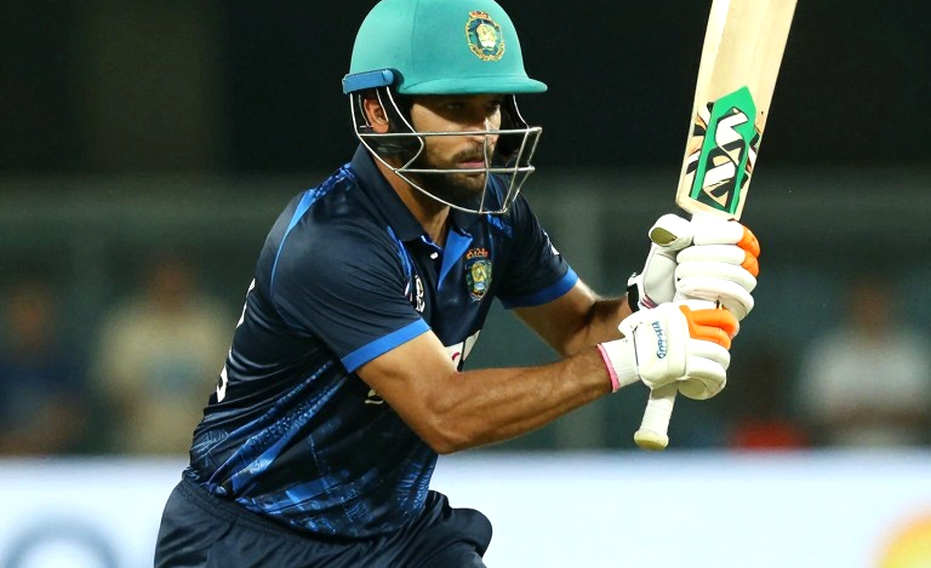
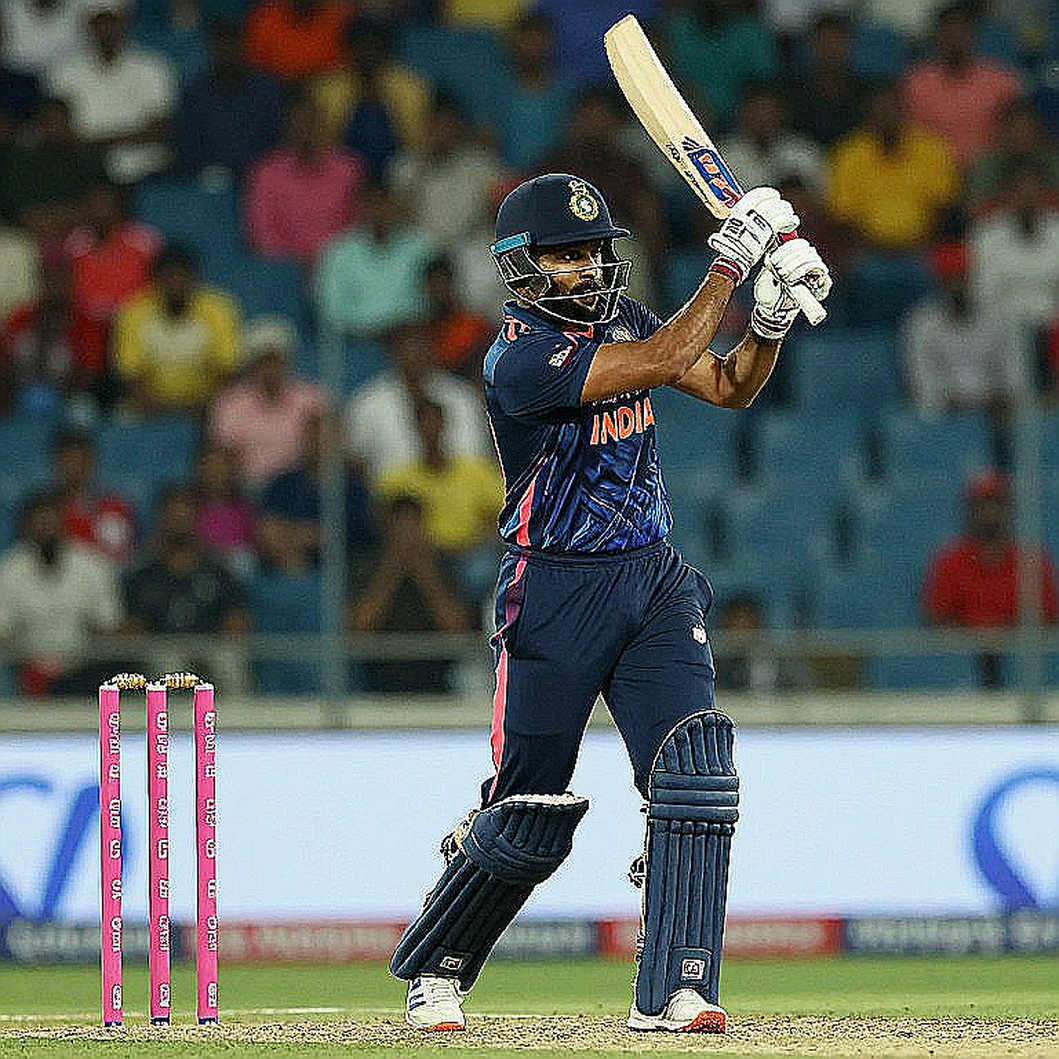
Read Samson's innings through that lens. He made well over two-thirds of a 93-run stand; his partner made roughly a quarter. That was not a partnership of equals — it was one batter controlling and the other rotating. Samson's real value is not the 67; it is the rate at which he removed risk from the chase. Sixty-seven off 33 is a strike rate around 200, a top-decile innings rather than a typical one. And that is where the caution belongs: this is a ceiling data point, not a central-tendency data point. Treating one innings as the new baseline is the oldest error in the game.
The second truth hides inside the margin. India lost four wickets from 93/0. The middle order absorbed pressure that the opening pair had removed — and that pressure is real, because the other side of a fearless top two is a middle order that is sometimes exposed very early and sometimes asked to score very fast. "Won by four wickets" does not tell you how much control India had; it only tells you that this time the loss of control did not cost the match. Against 240, or on a two-paced surface, the same fault line travels the distance.
Naman Dhir is a different and probably more durable story. Kotak said plainly that Dhir is an all-rounder who knows his role, and that his spin quota can be one, two or four overs depending on the number of left-handers in the opposition. That is a change in the basis of selection: role-fit is replacing seniority and reputation. A batter who quietly supplies a sixth bowling option is worth more than his own numbers, because he frees a specialist slot elsewhere in the XI.
And Kotak's technical note on Sooryavanshi was the most useful thing said in that room. He observed that the bounce of a practice wicket and match conditions are very different, and that what you learn batting at this level is a separate thing from the ability to hit. He added that he does not want to tinker with the boy's natural method. The real gap is not shot range but practice-to-match transfer, and the coach has put his finger exactly there. That is a credible diagnosis, and it also tells you the staff already know where the exposure lies.
Now the third statement. Kotak himself sketched a batter who knows he must hit three or four sixes in the first two overs, and who, after two low scores, plays the third match in fear of being dropped. This is the same team preaching fearless cricket. A system that orders risk-taking also punishes risk-taking, and India's batting depth is what makes that punishment possible. When three or four international-quality batters are sitting in the dressing room, the freedom to take risk exists on paper, not in the head. That second page never becomes a headline in a press conference.
One more question about squad construction. Per Kotak, Sooryavanshi is the only other top-order batter in the squad. Which means one injury to an opener puts a 15-16-year-old into a T20I. "Deep squad" and "one spare top-order batter" cannot both be true at once. This is not a talent question; it is a squad-construction question. And this is the script written in the empty seats — the boy on the bench does not appear in the trophy photograph, and you have to sit still long enough to read him.
One note on the crowd. The noise came when the sixes came. But the equation was settled in overs one to six, without any shot that would make a highlight reel — singles, twos, and a mounting squeeze on the bowler. I went looking for the roar and found the rewrite. In the commentary box every cheer is a sub-editor, and sub-editors sometimes file the wrong headline. The crowd is a witness, not a verdict — here it applauded the sixes while the singles in the third and fourth overs did the work.
What to watch next? The surfaces. If the series keeps offering Hagley-flat decks, India's batting depth will be decisive. If the ball starts moving off green grass, this same fearless template will send in its bill, and the middle order will pay it. Look at Sooryavanshi over the next few months through a development lens rather than a selection lens; no international sample exists for him yet, and the IPL-to-international jump has historically been unkind. The real question is not whether India can play without fear. It is whether India can let its batters fail without fear.