
Asian Cricket's Third Pillar: Sports Journalism Standing Between Format, Data and Market
यह रिपोर्ट एशियाई क्रिकेट के संरचनात्मक विश्लेषण पर केंद्रित है: तीन प्रारूपों (टेस्ट, वनडे, टी20) के बीच पद्धतिगत अंतर, खिलाड़ी मूल्यांकन में औसत-स्ट्राइक रेट-इकॉनमी दर के जोड़े और छोटे नमूनों का जाल, टीम रैंकिंग बनाम घरेलू-विदेशी अंतर, फ्रैंचाइज़ी लीगों (आईपीएल, पीएसएल, बीपीएल, एलपीएल, आईएलटी20) की आर्थिक संरचना और नीलामी-मूल्य निर्धारण, आईसीसी राजस्व वितरण और एनओसी-डीआरएस-डीएलएस जैसे नियम, छह-परत जोखिम मानचित्र, लोक-कथा और अपेक्षा-अंतराल का विश्लेषण, तथा युवा विकास से प्रसारण बाज़ार तक उद्योग-संचरण। मुख्य निष्कर्ष: खेल-विश्लेषण की गुणवत्ता उसकी अनिश्चितता की ईमानदारी से मापी जानी चाहिए; और डेटा-पाइपलाइन की अखंडता — जहाँ ढाँचा पूरा पर सामग्री शून्य हो — आज खेल-पत्रकारिता का सबसे बड़ा संस्थागत जोखिम है। जब पर्याप्त तथ्य न हों, तो सही व्यावसायिक उत्तर 'उपलब्ध जानकारी अपर्याप्त है' है, न कि अनुमान।
1. An Empty Report and the Debate It Sparked
Cricket writing usually begins with a score, then drifts into commentary. But the layer of sports journalism under the most pressure today is not the score itself — it is the framework that explains the score. After every major tournament, hundreds of reports appear with near-identical architecture: a match summary, one or two statistics, a line on a player, and a prediction. When that architecture is handed to automated tools, the risk is not plagiarism of the keys; it is the confident presentation of emptiness.
This special report begins with exactly such a situation: an analytical pipeline in which title, summary, source, stance, purpose, entities and information points were all blank, while only a regional tag was populated. The structure was complete; the substance was zero. To a reader the document looked finished; to a professional it was a template. That gap is the central problem of contemporary cricket journalism. Commercial and technical complexity has risen sharply, while the tooling of reporting has become cheaper at the same rate. The result is that cricket's fine distinctions — format, weather, pitch, home advantage, sample size, home-versus-away splits — are routinely crushed.

Asia is the epicentre of this pressure. It supplies a large share of global cricket revenue, the largest audiences, and five of the twelve ICC full members: India, Pakistan, Sri Lanka, Bangladesh and Afghanistan. Add emerging sides such as Nepal, associate members such as Oman and the UAE, and a vast Gulf diaspora audience, and the region becomes cricket's densest institutional space. In such density, every decision — which format when, which player gets an NOC, which league gets which window — stops being purely sporting and becomes commercial and political.
2. The Discipline of Format
Cricket's largest methodological problem is that its three main formats are not the same sport. Test cricket turns on innings length, ball age, pitch wear and the growing influence of spin in the second innings. ODI cricket breaks fifty overs into three clear phases: powerplay, middle overs, death overs. T20 compresses those same phases into twenty overs, where a single over can flip the match. Treating a T20 league strike rate as proof of Test batting ability, or an ODI economy rate as proof of T20 utility, is methodologically wrong even when the numbers look alike.
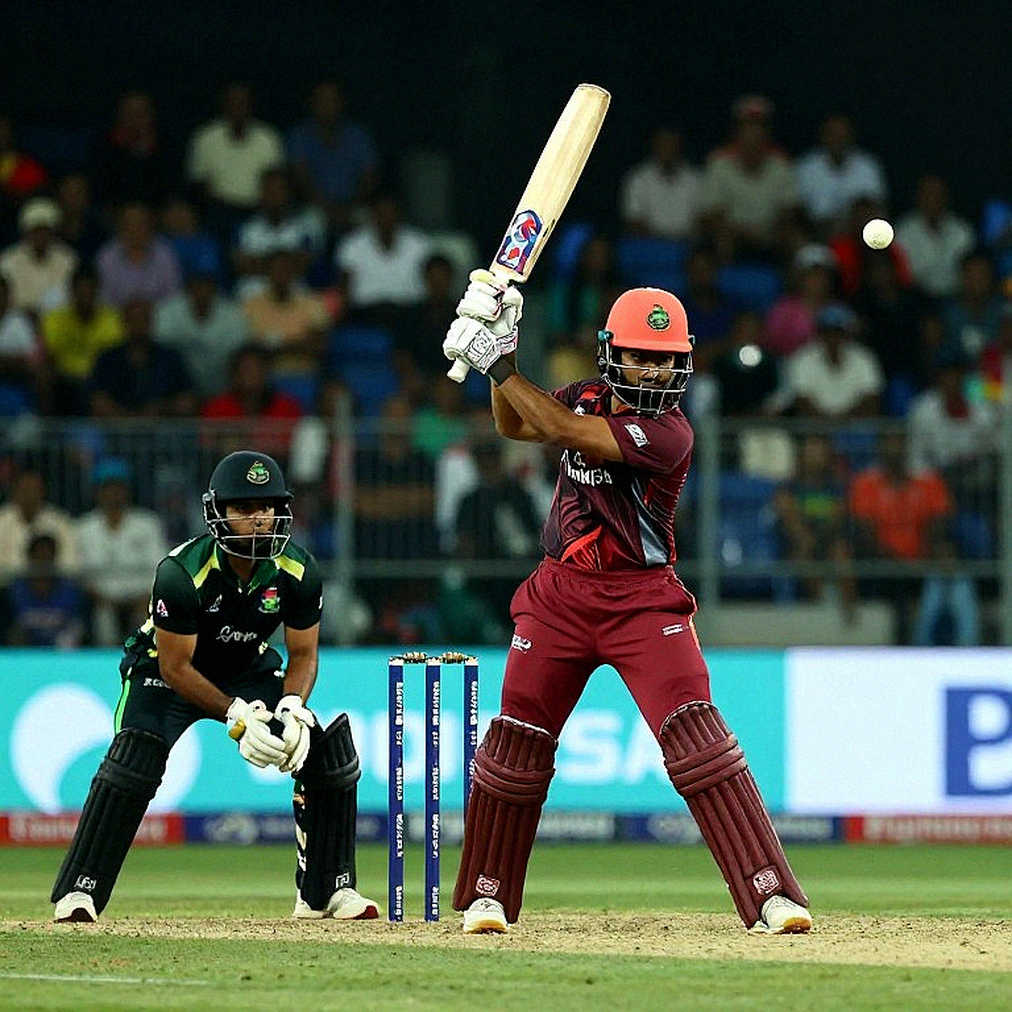
Hence the first question in serious analysis is always: what is the format? Until that is settled, no downstream interpretation holds — not powerplay strategy, not middle-overs spin control, not death-overs yorker percentages. This is not academic purism. The commonest media error is to cite a T20 league record and then question a player's Test technique, or to use a Test hundred as a guarantee of limited-overs selection.
Match nature matters just as much. Bilateral series, ICC global events, franchise leagues and warm-up fixtures carry entirely different stakes. In a World Test Championship cycle, teams rotate around a points table; at a World Cup, every match carries knockout weight; in a league, franchise interest can collide with national interest. Until the source's competition type is identified, the word 'pressure' is incomplete, because the scale of pressure differs by competition.
Venue and environment form the third axis. Subcontinental pitches change behaviour with the season; dry summer surfaces favour spin, while moisture and dew alter bowling in monsoon and winter. Gulf day-night temperature differentials and dew make chasing easier. Rain-affected matches invoke Duckworth-Lewis-Stern, which changes the target and therefore the meaning of a win. Without this context, any tactical commentary is partial.
A professional match analysis therefore establishes format, competition, venue, toss, weather and result before it comments. When that scaffold is empty, the correct answer is 'no conclusion available', not 'this is how it usually goes.' That difference separates an evidence-based report from a filler-based one.
3. Player Evaluation: Averages, Strike Rates and the Small-Sample Trap
A batting average says how many runs a player makes per innings, not at what rate or under what conditions; strike rate was added for that reason. But strike rate alone misleads too, because a fast scorer who is dismissed early delivers little. The real picture lies in the pairing of average and strike rate, overlaid with situational splits: first innings versus chase, spin versus pace, home versus away, middle overs versus death overs.
For bowlers the equivalent pairing is economy rate and strike rate. Low economy saves runs; low bowling strike rate takes wickets. In T20 one is sometimes worth more than the other depending on match state; in Tests the equation nearly inverts because wicket-taking is the primary function.
The biggest trap is sample size. A strike rate of 160 across fifteen T20 innings can crown a 'star'; the same player may drop to 115 next season. That swing may be poor form or pure statistical noise, and without multi-season comparison no trend can be claimed. Home records routinely mask weaknesses: familiar pace and bounce, crowd support and slower opponent adaptation inflate numbers, while the same player can look ordinary abroad.
The third factor is the age curve. Peak performance typically occupies a defined age window, declining earlier for fast bowlers and later for spinners and batters. Decisions taken near that peak — long contracts, captaincy handovers — should account for the curve. Injury history belongs alongside it: a fast bowler's three-year workload, recovery pattern and workload management matter as much as his statistics.
Role is the final refinement. Opener, middle-order anchor, finisher, wicketkeeper-batter, pace bowler, spinner, all-rounder — each has a different benchmark. A finisher's 140 strike rate is valued above an anchor's 140 because the finisher operates at higher risk and less time. Comparing numbers without fixing roles is like comparing a seamer's economy to a spinner's directly.
Before any claim about a player, journalism needs at minimum: name, role, format, the specific statistic underpinning the claim, career versus recent-twelve-month comparison, and home/away splits where relevant. If none of that exists, the honest answer is that evaluation is not possible. That is professional integrity, not weakness.
4. Team Landscape: Rankings, Home-Away Differentials and Bench Depth
Team analysis begins with ICC rankings, which are a moving average weighted toward recent results and split by format — separate Test, ODI and T20I tables. WTC points tables and bilateral series outcomes are computed differently again. Using the word 'ranking' therefore requires stating format, date and method.
More important than the ranking is the home-away differential, cricket's single largest variable. Some teams are world-class at home and ordinary abroad; others travel better because their structure is built on adaptability. A team's real strength shows in its away record, because home numbers are helped by pitch, weather, crowd and the absence of travel fatigue. When a report says a team is strong, the next question must be: where, and under what conditions?
Squad structure rests on four pillars. First, batting depth — how competent the batting is down to seven and eight, and whether the lower order adds runs or merely collapses. Second, bowling composition — pace-spin ratio, new-ball specialists, death specialists, and whether anyone can take a wicket when conditions are unhelpful. Third, bench depth — who replaces an injured or out-of-form player, and whether the standard holds. Fourth, age structure — whether the core is ageing out together or the mix is balanced.
All four must be read against the opponent. Style matchups are real: on a fast, bouncy surface one side's pace can expose another's fragile top order; on a turning surface a middle order can seize up. Rivalries such as India-Pakistan add an emotional layer that must be weighed separately, because pressure in such matches differs in magnitude and decisions under pressure are not always rational.
One warning is essential. Without team names, format, venue and opponent, any sentence saying a team is strong or weak is hollow. Such sentences sound analytical but are opinions without a base. The professional standard is: gather the five or six facts first, then write the sentence. The reverse order turns journalism into advertising.
5. Asia's League Landscape: From IPL to ILT20
The biggest structural event in Asian cricket of the past two decades is the rise of the franchise league. The IPL launched in 2026 and quickly became not just cricket's but India's entertainment economy's central product. The Pakistan Super League (2026), Bangladesh Premier League (2026), Lanka Premier League (2026) and UAE's ILT20 (2026) followed. Each has a different economic model and a different ceiling.
The IPL model rests on three pillars: a huge domestic broadcast market, franchise-based audience loyalty, and an annual auction that sustains competitive balance. The auction is itself an economic event, pricing players through performance, local popularity, overseas-quota availability and immediate franchise need. This is where sporting value and market value visibly diverge. A player may be worth far more than his numbers if he sells tickets locally, and far less if the role he fills is already occupied.
Four distinct pricing logics operate. First, the local young star — youth, performance and a large home market combined. Second, the all-rounder, who delivers two skills in one slot and whose demand is partly inflated by scarcity. Third, the rare role — wicketkeeper-batter, left-arm seamer. Fourth, panic bidding, when a side with a visible gap at the back end of an auction pays well above market. The fourth logic is the weakest economically and the strongest emotionally.
Retention and Right to Match provisions add another layer, shaping squads before the auction. This creates a double inequality: sides with strong regional bases grow stronger through retention, while newer or weaker franchises face a thinner, costlier auction. It is a competitive-balance question debated in every league.
The league-versus-national-team tension is now permanent. Player workload and injury risk rise on both fronts, and central contracts, No Objection Certificates, league windows and the international calendar collide routinely. Whether a star plays a league before a major tournament becomes a headline either way, and the real reason is usually injury management or a board agreement rather than the emotional story constructed outside.
Transparency matters here. Until broadcast rights values, franchise valuations, player salaries and attendance figures are public, any claim about a league's health is speculation. The commonest defect in cricket reporting is measuring league success by broadcast visibility rather than by franchise financial stability, smaller boards' participation, and benefit to the local talent pipeline.
6. Rules and Governance: From ICC Revenue to NOCs
Cricket governance runs on three levels: the ICC globally, regional bodies such as the Asian Cricket Council, and national boards. Power and revenue distribution among them has always been contested. The 'Big Three' revenue model discussed after 2026 — giving India, England and Australia larger shares — raised the question of whether smaller boards' shares matched their developmental contribution. The model was later revised, but the underlying asymmetry persists: where audiences and revenue concentrate, decision power concentrates too.
Playing-rule disputes are a separate layer. DRS improved umpiring transparency while introducing a strategic question — when to review and when not to. Losing a review can affect later matches, so it is not merely technical but tactical. DLS was updated in 2026 with Stern's revision, making rain-affected targets fairer, though the principle that both sides should have equal opportunity is never fully satisfied because disruption is unequal.
Slow over-rate sanctions have repeatedly changed shape. The intent is to protect entertainment value, but critics argue they ignore conditions, since heat, humidity and long innings naturally slow the game.
Integrity is the most sensitive layer. The 2026 Cronje affair, the 2026 Pakistan spot-fixing case and the 2026 IPL spot-fixing case all show that cricket's financial and emotional intensity is fertile ground for corruption. Anti-corruption units, education programmes and monitoring followed, but claiming the problem is solved would be wrong. The correct position is that no analysis can say 'no risk exists'; at most it can say no risk was identified in available information and none has been excluded. Absence of information is not a clearance.
Eligibility and selection rules generate disputes too — NOC conditions, central contract discipline, and permission to play overseas leagues. These affect player careers directly and national preparation indirectly.
At the top sits the political layer. India-Pakistan bilateral relations shape the cricket calendar directly; some tournaments are played at neutral venues, and participation itself becomes contested. Without this layer, no calendar change in Asian cricket is intelligible.
7. A Multi-Layered Risk Map
Treating risk as a single category is the biggest mistake in cricket analysis. At least six layers are needed.
Sporting risk: injury, workload, failure to adapt. It is greatest for fast bowlers, whose bodies break most and whose value is highest. Rotation, workload monitoring and clear communication are the mitigations.
Personnel risk: a simultaneous retirement wave, league recruitment of talent, coaching turnover. Losing five core players within two years costs two to three years of rebuilding. This risk does not appear in statistics but appears plainly in results.
Commercial risk: broadcast rights renewal, smaller boards' financial fragility, new-league funding. Cricket income concentrates in broadcast, sponsorship and tickets; a stumble in any one shakes the structure.
Rules and integrity risk: fixing exposures, government interference, rule controversy. Here it bears repeating that 'no information' does not mean 'no risk'.
Public opinion risk: player scandal, rivalry-match security, betting-adjacent image damage. In the digital era this layer activates faster than ever — a clip, a post, and brand value shifts.
Systemic risk: extreme weather, geopolitics, structural changes such as Olympic-calendar restructuring. Climate change now affects scheduling directly, pushing matches away from daytime heat.
Above all six sits a seventh: analytical-process risk. It is the most overlooked and the most dangerous. If a report's input is empty while its output looks complete, the reader infers that nothing noteworthy was found — when in fact nothing was ever supplied. This false assurance is the real institutional hazard, because it breeds complacency rather than correction.
The remedy is procedural, not technical: impose a minimum information set for every report — format, teams, venue, and at least one verifiable fact — and stop the pipeline when it is absent.
8. Narrative and the Expectation Gap
Stories are more powerful than statistics in cricket. 'A new generation has arrived', 'the golden age of bowling is back', 'the captain changed and fortunes changed', 'this player is the next superstar' — these lines are written before any fact. Calling them narratives is not mockery; they organise audience experience. The analyst's job is to see what holds them up and when they will break.
Three questions test durability. First, fundamental support: is there a structural change behind it — youth development reform, coaching overhaul — or just two or three matches? Second, sample: how many matches, months and formats? Third, expected duration: some narratives die in a series, others run a decade.
The expectation-gap analysis rests on this. The space between market expectation and objective assessment is where overvaluation and undervaluation are identified. If a team is widely believed to be rising while its away record is weak, expectation has outrun reality — that is hype. If a team's home record is average but its away record is strong and undiscussed, it is an underrated silent powerhouse.
One durable conclusion is that short-form league brilliance translates slowly to international level. A T20 league strike rate and an international T20 strike rate are different things because bowling quality, stakes and pitch variety change. Likewise, a league breakout batter's entry into Test cricket is a separate challenge requiring patience and technique.
Sentiment indicators — tickets, jerseys, followers, endorsements — are supportive, not decisive. Crowd enthusiasm and player performance are distinct, with a time lag; sometimes enthusiasm rises first and performance follows, the classic case of expectations running ahead.
To be explicit: no odds or market signals are analysed here, and no advice of any kind is offered. Sports analysis exists to understand the game, not to bet on it.
9. Industry Transmission: From Youth Development to Broadcast Markets
Cricket is a system where a change at one level surfaces three or four levels later. Four segments matter.
Youth development and talent supply is the slowest and most decisive. Strong domestic structures, district-level coaching and transparent selection produce national-team effects eight to ten years later. A weak development base concentrated in a few cities shrinks the talent pool even while the national team performs well for a few years.
National teams and leagues change fast and visibly — captaincy, new players, league windows. This is media's favourite segment because events are immediate. But its performance is set by the first segment, which is why distinguishing permanent from temporary change is hard.
Broadcast, advertising and derivative markets supply the most data — audiences, rights values, sponsorship rates — but their link to on-field performance is not always clear. Sometimes audiences rise despite poor results, because controversy is also entertainment.
The South Asian heartland market supplies the largest share of global revenue. Its distinguishing feature is deep audience culture: cricket is tied to language and identity, and emotional investment is high. That investment is valuable to advertisers and an obstacle to analysts, because rational assessment is often drowned by emotion.
Understanding transmission requires three things: what the event is, which market it affects, and over what horizon. When any is missing, the best answer to 'what will the impact be' is that it cannot be assessed on available information.
10. Pipeline Integrity: Sports Journalism's New Crisis
Back to the empty report. Most readers do not know that much sports reporting now passes through an automated chain: extract source text, isolate information points and entities, populate an analytical frame, write the piece. Failure is possible at every step — and the most dangerous failure is the silent one.
When a source body fails to extract — paywall, JavaScript rendering, language detection, network failure — the information-point list is empty while the frame remains. The result is a document with headings, subheadings and tables, and zero substance. It reads as complete, which is precisely the danger.
Five symptoms mark this failure. Half-filled fields: a regional tag populated, everything else blank. Uniform blanks across every dimension, showing the problem is input, not analysis. Ambiguous format identification, which makes every downstream conclusion suspect. An empty entity list — when a cricket report names no player and no team, the text was never read. And schema non-conformance, where a tag diverges from the specification, showing weak control upstream.
The remedy has three levels. Re-extraction: retrieve the source again and confirm the body arrived. Automated gating: validate mandatory fields and halt on an empty information list. Explicit null marking: record 'null result' rather than 'nothing noteworthy'.
This sounds technical but is really an ethical matter. Readers trust reports; they assume what is written has been checked. A complete frame filled with invented content is not an error but a betrayal of trust. The professional standard must therefore be: when there are no facts, say there are no facts. 'Available information is insufficient' is not weak journalism; it is the most honest kind.
11. Conclusion: The Discipline of Understanding the Game
Asian cricket is passing through its densest phase. Three formats, multiple leagues, enormous audiences and a complex governance structure run simultaneously. In such density every simple conclusion is suspect. To say a team is better requires saying in which format, at which venue, over which period. To say a player is a star requires saying in which role, on what sample, against which opposition. To say a league is successful requires both financial and structural measures.
The central argument of this report is that the quality of cricket analysis is measured not by the firmness of its conclusions but by the honesty of its uncertainty. An analyst who can say clearly where he is certain and where he is not is more trustworthy than one who answers every question confidently.
And journalism's biggest challenge now is not speed but truth. Information flows so fast that verification lags. In such conditions the most radical act is for the reporter to ask first: do I have the facts to make this claim? If the answer is no, the best report is the one that says: there is not yet enough information. That is the most direct way to respect the game.