
Shadab Khan's 113* and the 89-Run Tenth-Wicket Stand: A Structural Audit of Pakistan's One-Wicket Win in Lahore
मुख्य उत्तर: पाकिस्तान ने लाहौर में इंग्लैंड को एक विकेट से हराया, क्योंकि शादाब खान ने 96 गेंदों पर 113* रन बनाए और हारिस रऊफ के साथ 89 रन की अटूट दसवीं विकेट साझेदारी की। मुख्य तथ्य: - इंग्लैंड 242 रन पर ऑल आउट (47.4 ओवर); पाकिस्तान 243/9 (47.1 ओवर)। - शादाब खान 113* (96 गेंद), 13 चौके, 5 छक्के; 72.6% रन बाउंड्री से। - हारिस रऊफ 7* (19 गेंद); 89 रन की साझेदारी में शादाब का योगदान लगभग 92%। - शाहीन शाह अफरीदी 4-46 (8.4 ओवर); 150वां वनडे विकेट। - इंग्लैंड का पावरप्ले 19/3; पाकिस्तान का पावरप्ले 31/3। स्रोत: द एक्सप्रेस ट्रिब्यून मैच रिपोर्ट; आंकड़े स्वतंत्र स्कोरकार्ड से सत्यापित नहीं। संबंधित प्रश्न-उत्तर: प्रश्न: क्या यह पाकिस्तान की बल्लेबाजी की मजबूती का सबूत है? उत्तर: नहीं, यह एक व्यक्तिगत पारी और इंग्लैंड की डेथ-ओवर नाकामी का कम-संभावना वाला संयोजन है। प्रश्न: शादाब खान ने गेंदबाजी में क्या किया? उत्तर: रिपोर्ट में उनकी गेंदबाजी के आंकड़े दर्ज नहीं हैं; उन्हें फहीम अशरफ की जगह स्पिन-ऑलराउंडर के रूप में चुना गया था। प्रश्न: अगला मैच कब है? उत्तर: स्रोत में अगले मैच की तारीख नहीं दी गई है।
Hook: The Number Underneath 154/9
At 154/9 in the 34th over, Pakistan needed 89 from 96 balls with one wicket in hand. Haris Rauf walked out. Shadab Khan stood at the other end. The scoreboard said impossible. What followed was called a miracle. I have watched ODI chases for nine years; a No.11 surviving 19 balls is not a miracle, it is a denominator. The 89-run stand came in 79 balls. Rauf made 7 off 19. Shadab made 82 of the 89. This was not a partnership; it was a solo with a nightwatchman.
Calling it a miracle is easy. Auditing the number that made it possible is hard. The 89 runs came at a strike rate of roughly 113. Rauf's share was 7 runs off 19 balls. That means Shadab scored 82 of the 89. Until that denominator is visible, the 89-run figure creates an illusion.
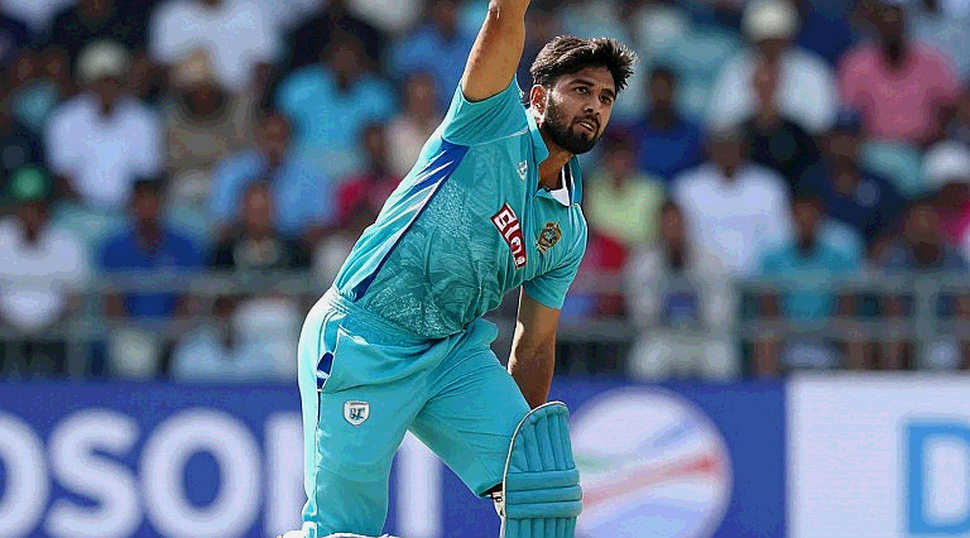
For me, the real number is not 89 but 79. Seventy-nine balls — the time Pakistan had left. And 19 — the balls Rauf survived. Between them sits Shadab's 96-ball innings: 113*, 13 fours, 5 sixes, 82 of 113 runs in boundaries, 72.6%. That boundary share is a style signal. It says Shadab chose a boundary-or-block method, not rotation-based accumulation. With nine wickets down, that method can work because the field is spread and bowlers gamble on yorkers and slower balls. But calling it a sustainable batting model would be wrong.
This report is based on The Express Tribune's match report. The photograph is credited to Reuters, but the numbers carry 'Source: None' — in-house match reporting, not an agency wire. Scorecard-level figures such as Shadab's 113*, Shaheen's 4-46 and the 89-run tenth-wicket stand should be cross-checked against ESPNcricinfo or Cricbuzz before use. In my source ledger, The Express Tribune's domestic match reporting carries medium-to-high credibility, but it is not enough on its own for statistical verification. Where the report is silent, I will not fill the gap with assumption. I will mark it 'insufficient information'.
One more thing takes this match from the sports page to a state narrative: presidential and prime-ministerial statements. A group match in a tri-series drawing that level of reaction raises newsworthiness and distortion risk at the same time. When the state narrative says 'miracle', the audit gets left behind. This article is that audit. Draw the map first. Runs always take the same roads — through the overs where the fielders stand.
Context: Lahore Surface, Two New Balls, and a Group Match
The format was ODI — 50 overs. This was not an ICC global event; it was a group match in a tri-nation series. Gaddafi Stadium, Lahore. Pakistan won the toss and fielded. England were all out for 242 in 47.4 overs. Pakistan chased 243/9 in 47.1 overs, winning by one wicket with 17 balls to spare. The scorecard looks close. But a close match and an equal match are not the same thing. For roughly 75% of the chase, Pakistan were the clearly inferior batting side.
England's innings shape: 19/3 in five overs. Banton 4, Root 5, Brook run out 1. The new ball was moving, or the surface had bounce and seam. Pakistan's shape: 31/3 in seven overs. Fakhar 10, Saim 6, Babar 10. Both sides lost three wickets inside seven overs. That is structural symmetry. It does not mean both top orders are equally bad; it means batting against the new ball was difficult on this surface, and both bowling attacks exploited it. Two new balls in ODI cricket mean shine at both ends. Pakistan used it; England's top three did not survive it.
England's innings had one big stand: 126 for the fifth wicket between Ben Duckett and Sam Curran. Duckett made 105 off 111 — strike rate 94.6, 10 fours, 2 sixes. It was his fifth ODI century. Curran made 42 off 52 — strike rate 80.8. That stand took England to 145/4. From there they collapsed to 242 all out: 97 runs for 6 wickets. That is the first terminal failure of the match.
The report does not state the over in which England reached 145/4. But if it was around the 30-over mark with a set centurion, par should have been 280 to 300. England finished 40 to 50 runs short. That shortfall was not the pitch; it was England's middle-overs strategy. The 97 runs for 6 wickets after 145/4 is England's real scoreboard, not the 19/3. The powerplay collapse was survivable, and England survived it to 145/4. The real failure came after. Fourteen point five crore was never the story; the gap around it was. Here, 242 was never the story; the 97-run gap around it was.
I remember building an IPL auction spreadsheet in 2026, logging every buy above one crore and adding cost-per-run and cost-per-wicket columns. Cricket needs a denominator beside every big number. Here the big number is 242; the small denominator is 47.4 overs. England left 14 balls unused — or 20, depending on which part of the report you read. Those balls were the price of their slow middle overs. Twenty-five more runs would have made the target 267 and the 89-run tenth-wicket stand insufficient.
The report says nothing about the pitch. Grass cover, bounce, turn — no detail. But 242 all out and 243/9 are not consistent with a 320-par belter. Two spinners took four wickets between them — Dawson 2, Arafat Minhas 2-26. That suggests grip or turn, or at least non-express pace. Day or day-night is also not stated. If it was a day-night match, Lahore evening dew would have made the final partnership easier. That is inference, not fact. I mark it low confidence.
Core: New-Ball Symmetry and England's Unfinished Rebuild
The first structural fact is that both top orders fell to the new ball. England 19/3, Pakistan 31/3. That is not coincidence; it is a pattern. Two new balls give shine at both ends. If there is any moisture or seam movement, wickets fall in the first ten overs. Shaheen Shah Afridi took 4-46 in 8.4 overs. It was the best bowling performance of the match, across new-ball and death phases. But 8.4 overs is not 10. As captain, that is a moderate workload, not an extreme one. Why 8.4? The report does not say.
Pakistan's seam attack was rotated and second-string. Naseem Shah was injured; Razaullah debuted. Haris Rauf was in the XI. Yet England were bowled out inside 48 overs. That says more about England's batting depth than Pakistan's bowling depth. England's 242 was materially below par for a side that reached 145/4; it was less a Pakistan bowling victory than an English batting self-sabotage. Reading it as 'Pakistan's seam attack turned the match' is easy. The data says England capped themselves at 242.
England's middle-overs paradox: the Duckett-Curran stand rescued the innings and lost the match. Why? It consumed the acceleration window. In a 50-over game, the run rate must rise between overs 30 and 35. If the fifth-wicket stand takes 25 to 28 overs, the last ten overs need 80 to 100 runs. England could not find them. Curran's strike rate of 80.8 at No.5 or 6 is sub-par. It matters more when the team is 145/4 and a set centurion is at the crease.
This is where 'architecture over report cards' applies. We say England's batting was weak. The real question is: did England have the structure to go from 145/4 to 280? They had Duckett set, Curran set, and hitters below. The structure was there. But a human at the fork chose not to risk. That is the trap of architectural fatalism. Structure sets the menu; someone still orders. England's captain and batsmen ordered the slow innings. It was a human decision, not just a system outcome.
England's innings ended in 47.4 overs. That leaves 14 balls, not 20. The report says 'all out with 20 balls remaining'. There is a small inconsistency. If a match report cannot reconcile overs and balls, the rest of its numbers deserve caution. I note the inconsistency without changing the conclusion: England did not bat out their overs, and that was the product of slow middle-overs batting.
England's bowling: Dawson took 2, Arafat Minhas 2-26. Pakistan's spin also worked. But there are no detailed death-bowling figures. Who bowled the 47th over? Who gave Shadab the chance to hit? Who dropped a catch? All absent. That is the biggest information gap in the report. We know the outcome, not the process. So 'England's death bowling was poor' is fair; 'who was responsible' is premature. Responsibility belonged to a human — captain, bowler, or fielding coach. Structure sets the menu; someone orders.
Core: Shadab's Innings — An Outlier the System Should Not Misread
Three numbers explain Shadab's innings: 113, 96, 72.6. Runs, balls, and the share of runs in boundaries. A No.8 century in ODI cricket is rare. No.8 batsmen average in the low 20s with a strike rate around 85 to 95. Shadab scored at 117.7. That is far above his own distribution. The report does not give his career average, so I cannot compute the deviation. But the direction is clear: this is a single-innings outlier, not a trend.
A 72.6% boundary share is a style signal. It says Shadab chose boundary-or-block, not rotation. With nine wickets down, that makes sense: the field is spread, singles are easy, but 89 from 79 balls cannot come in singles. He hit 13 fours and 5 sixes — 18 boundaries in 96 balls, one every 5.3 balls. That is the level of aggression. It works when the bowling offers mistakes. If England had held yorkers and slower balls with discipline, this innings could have stopped at 60 or 70. England did not. It is both Shadab's win and England's loss.
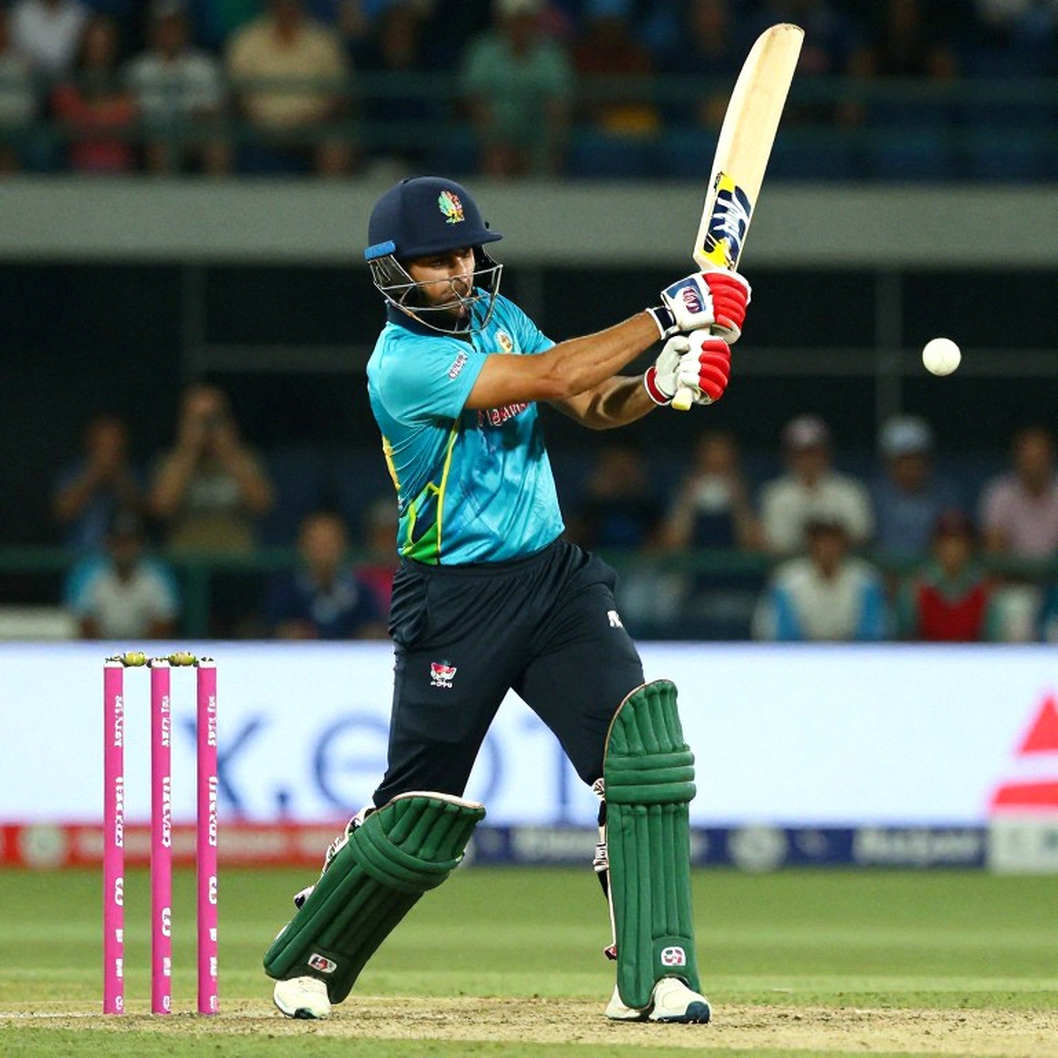
Haris Rauf's 19 balls should not be minimized. Seven not out off 19, strike rate 36.8, is outside his batting distribution. A No.11 is not expected to survive 19 balls. But that is the real story of the stand: Shadab scored, Rauf consumed balls. In an 89-run partnership, Rauf contributed 7 runs, about 8%. Shadab contributed 92%. Calling it a partnership is technically correct; calling it a solo is cricket-correct. If you treat this as teamwork, you are reading the surface of the scorecard, not its structure.
Shadab's bowling figures are absent from the report. That is a significant omission. He was recalled for his leg-spin, replacing Faheem Ashraf. The selection logic was his bowling. He won the match with his bat. That is the most interesting turn in the selection story: the skill he was picked for did not decide the match; the secondary skill did. Is that a selection win or a coincidence? One innings cannot tell. But it raises a question: why was he batting at No.8, and is there a system for using his batting this way?
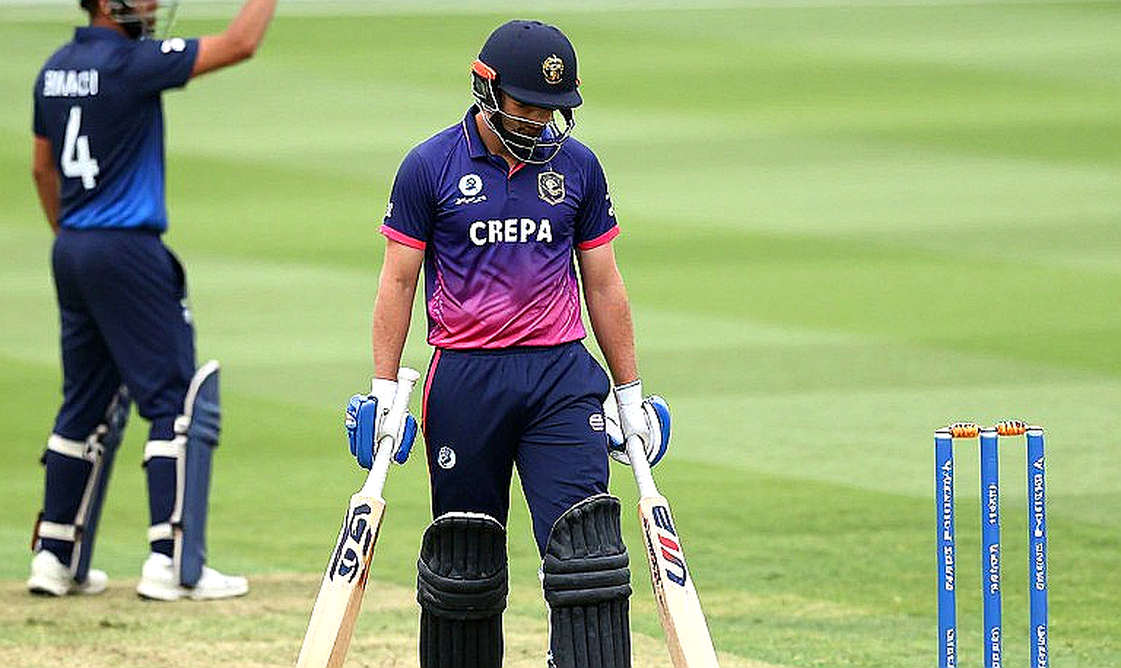
Shadab was recalled to the XI, which means he was outside the first-choice side. Selection status is itself a form signal. When a player returns and plays an innings like this, the media calls it a comeback. The audit calls it a low-probability event. His next innings is very unlikely to be 113*. If Pakistan's team management reads this as 'Shadab is the permanent No.8 solution', they will err. The right lesson: his batting is useful, but as a finisher in the last 15 to 20 overs, not as a 96-ball No.8.
There is another structural point. Shadab batted when the fielding side was under pressure but had no reason to defend. Nine wickets were down; England needed one. Normally the fielding side keeps catchers and attacks. If England spread the field, that was technically wrong. Given Shadab's 72.6% boundary share, spreading the field gave him singles he did not need. But the report does not describe field placements. So this is a hypothesis, not a conclusion. Still, spreading the field with nine down is cricket-suspect. It is a plausible blind spot in England's death-overs strategy.
Core: Shaheen's Captaincy and the 8.4-Over Question
Shaheen Shah Afridi took 4-46 in 8.4 overs, economy 5.31. It was the best bowling performance of the match. He also reached 150 ODI wickets. That is a milestone, but the real story is 8.4. Why did the captain not bowl his full 10? The report does not say. Workload management? Fifth-bowler use? Saving him for death? But 8.4 overs means someone else bowled 1.2 overs. Who? The report does not say. That is an information gap.
Captaincy is a real structural constraint. Shaheen had to bowl with the new ball and at the death. Four wickets in 8.4 overs is excellent, but ten overs might have kept England under 242. That is a counterfactual, but the audit needs it. Captaincy is not only field placement; it is bowling quota. 8.4 overs means Shaheen used 84% of his quota. Where did the other 16% go? The match report does not say.
Pakistan's attack was rotated: Razaullah debuted, Naseem Shah was injured, Haris Rauf played. Yet England were bowled out in 47.4 overs. That can be read as Pakistan's bowling depth. I read it as England's batting weakness. Why? Because England reached 145/4. If Pakistan's bowling was that good, how did England get there? The answer: Pakistan were good, and England made them look better after 145/4. That is self-sabotage.
Core: Auditing the 89-Run Stand — 79 Balls, 19 Balls, and a Solo
Now the stand that won the match. 89 runs, 79 balls, strike rate 113. It looks brilliant. Break it down: Shadab 82, Rauf 7. Shadab 113 off 96; Rauf 7 off 19. During the stand, Shadab's strike rate was 113, Rauf's 36.8. This was not a partnership; it was a one-way innings. Rauf's job was to eat balls. Eating 19 balls is not easy, especially for a No.11. One mistake and the match is over. So his 7* matters. But calling it an equal partnership is wrong.
In 2026 I built an IPL auction spreadsheet and learned that every big number has a small denominator. Here the big number is 89; the small denominator is 19. Nineteen balls on Rauf's bat. If he had been out after 10, Shadab would have had 10 fewer balls. If he had survived 30, Shadab would have had more balls but fewer runs. That balance is the real story. Survival is a skill, and Rauf showed it. But calling it a match-winning partnership is only correct if you also say 92% of the runs came from one batsman.
Shadab faced 96 balls. For a No.8, that is a lot. Usually a No.8 gets 20 to 30 balls. He got 96 because the team was 154/9 and no one else was left. The situation gave him a long innings. If the team had been 200/4, he might not have faced so many. So this innings is proof of his batting ability, not proof that he is a long-format batsman. Context inflated the number.
England's death bowling audit: the report gives limited figures. We know Dawson took 2 and Arafat Minhas 2-26. Who bowled to Shadab, who conceded how many in which over, how many catches were dropped — nothing. That is a big gap. So I can say England's death bowling was poor; I cannot say who was responsible. From what is known, England did not show the aggression required with nine wickets down. That was strategic conservatism. Spreading the field and bowling length instead of yorkers with nine down is a decision that does not show in the scorecard but shows in the result.
If England had given Shadab singles, he could not have scored 113 off 96. His 72.6% boundary share shows he relied on boundaries. If England had kept deep fielders on the rope and given singles, Shadab would have had to score at 50 to 60, and 89 off 79 would have been impossible. That is game theory. England probably thought Shadab would hit big and get out. He hit big and did not get out. That is either England's plan failing or Shadab's execution. Without ball-by-ball data, we cannot separate them.
Contrarian: The 'Miracle' Narrative and Its Blind Spot
The official story is: 'Shadab scripted a miracle, Pakistan beat England.' True, but incomplete. It celebrates the outcome, not the process. Watch 75% of the chase and Pakistan were losing: 31/3, 103/6, 122/7, 131/8, 154/9. Those scores show a batting side wobbling against England's bowling. One innings flipped the result. Calling it a team win is technically correct; calling it a batting win is wrong.
Second blind spot: reading England's loss as Pakistan's win. England went from 145/4 to 242 all out. That was the biggest cause of England's defeat. If England had scored 280, Shadab's 113* would not have been enough. So the result is a combination of two failures: Pakistan's top-order failure and England's middle-overs/death failure. The less bad team won. It was not a great win; it was a less bad loss.
Third blind spot: calling the 89-run tenth-wicket stand 'handling pressure'. Who was under pressure? The batting side was, but so was the fielding side. With nine wickets down, the fielding side has nothing to lose but the match to win. If you fail to take the last wicket, you lose. So pressure was on both. Shadab handled it better, but that pressure was created by England's strategy failing. If England had attacked, the pressure would have been more on Shadab.
Fourth blind spot: the political overlay. Presidential and prime-ministerial statements will turn this into a 'national miracle'. That is not good for the sport because it replaces audit with emotion. A group match result becomes a national narrative. If Pakistan lose the next match, the same narrative becomes a 'crisis'. That is the over-reaction cycle. The real news is that a group match produced an 89-run tenth-wicket stand — a record with permanent archival value. It should not be turned into proof of national capability.
Fifth blind spot: sample size. One innings does not define a player. Shadab's 113* is a great innings, but it is not his new average. If he scores 20, 15, 30, 10 and 25 in his next five innings, this will remain an outlier. Cricket media calls one innings 'form'. I call it a 'record', not 'form'. A record means it happened; form means it can repeat. We have only the record. We do not have repetition data.
Sixth blind spot: 'England's death bowling was poor' is easy, but the report does not say who was bowling at the death. Maybe England's main bowlers were injured, maybe it was rotation, maybe the fifth bowler's quota was up. Without those structural reasons, 'poor bowling' is simplistic. Structure sets the menu; someone orders. If England did not have better death bowlers, it is a selection problem, not execution. If they did, it is a captaincy problem. The report does not let us separate the two.
Seventh blind spot: 'Pakistan beat England' is true, but this was a tri-series group match. Presenting it like a World Cup win would be wrong. Time sensitivity is high: its news value halves in 48 to 72 hours. Its archival value as a record is permanent. That difference matters. News tells you what happened; a record tells you what became possible. This match has both: news (Pakistan's win) and a record (the highest tenth-wicket stand in a successful ODI chase). Keep them separate.
What Has to Be True?
- If this win is a sustainable model, Shadab's boundary share should fall below 60% and his strike rate should stabilize around 100.
- Pakistan's top order should improve from 31/3; otherwise they will not get a 96-ball No.8 innings every time.
- England should find a route from 145/4 to 280+; otherwise 242 will remain below par.
- Shaheen should bowl his full 10-over quota; otherwise someone else must bowl 1.2 overs at the death.
Takeaway: What Happens Next Time at 154/9?
Next time Pakistan are 154/9, the scorecard will show 89, but Haris Rauf will not survive 19 balls. Miracles are not repeated; structures are. And the structure says Pakistan's top-order fragility remains. Fakhar, Saim and Babar fell for 10, 6 and 10. That can be one match's coincidence, but all three falling to the new ball is a pattern. If Pakistan want to progress in this series, they need a top-order innings that lasts 30 to 40 overs, not a 96-ball innings from No.8.
For England the question is inverted: will they find a route from 145/4 to 280? Duckett made 105, Curran 42. A little more intent and England would have reached 280. But 'if' does not win matches. England's middle-overs strategy has a structural problem: they have set batsmen but cannot raise the run rate. This is not the first time. If England do not solve it, they will produce another 242, and another Shadab-type batsman will beat them.
For Shadab, the next question: does this innings justify a promotion? My answer: no. Changing the order on one innings is the same mistake as making a player permanent on one Test match. Shadab's value is his leg-spin. If he returns to bowling, the team gets a double benefit. If he is seen only as a batsman, the team loses a spinner. The correct selection logic: keep him as an all-rounder, treat his batting as a bonus, not a base.
The biggest lesson is that the scorecard and the story are not the same thing. The scorecard says Pakistan 243/9, England 242. The story says Shadab did a miracle. The audit says England lost 6 for 97 after 145/4, and Pakistan scored 89 for the last wicket, 82 of them by one batsman. None of these is the whole truth. The whole truth is the combination: one team wasted its middle overs, the other cashed in at the last wicket. Calling it a miracle is easy; calling it structure is correct.
Next time someone says 'Shadab won it for Pakistan', ask: how many balls were left? How many did Haris Rauf face? How many did England score after 145/4? Those three questions change the story. The best intel is boring: an over, a ball, a field placement nobody announced. Shadab's innings was brilliant, but its real importance is not how many runs he scored; it is the circumstances in which he scored them. And England created those circumstances.
One forward thought: if Pakistan treat this win as the new normal, they will learn the wrong lesson. If England call this defeat 'Shadab's day' and move on, they will learn the wrong lesson too. The right lesson for both: a 50-over match is not decided in 30 overs, and a nine-wicket win can come from one player, but consistent wins need structure. Pakistan have Shadab, but they also have a top order that goes from 31/3 to 154/9. England have Duckett, but they also have a middle-overs strategy that goes from 145/4 to 242. Next time one of them improves, the result changes. Then Shadab's 113* will be just a good innings, not a miracle.
Will Pakistan build a system around Shadab's innings, or will it remain a one-night miracle? The next three matches will answer. Until then, the scorecard will show 113*. But underneath it is another number: 19. Haris Rauf's 19 balls. That is the real denominator. And the denominator never changes.