
WPL 2027 Auction: 150 Players, 27 Slots and the INR 8.15 Crore Arithmetic That Kochi Will Settle
**मुख्य उत्तर:** डब्ल्यूपीएल 2027 नीलामी 28 अक्टूबर 2026 को कोच्चि में होगी, जहाँ 150 खिलाड़ियों की सूची से पाँच फ्रैंचाइजी 27 खाली स्लॉट भरेंगी। कुल उपलब्ध पर्स 8.15 करोड़ रुपये है, यानी औसत 30.2 लाख रुपये प्रति स्लॉट। **मुख्य तथ्य:** - सूची 146 से बढ़कर 150 हुई; ब्री इलिंग और तीन अनकैप्ड भारतीय खिलाड़ी जुड़े। - यूपी वॉरियर्ज़ के पास सबसे बड़ा पर्स 3.75 करोड़ और 8 स्लॉट हैं, जिनमें 3 ओवरसीज़ हैं। - मुंबई इंडियंस के पास सबसे छोटा पर्स 90 लाख और 6 स्लॉट हैं, सभी भारतीय खिलाड़ियों के लिए। - दिल्ली कैपिटल्स चारों सत्रों की उपविजेता रही; उसके पास 1.10 करोड़ और 5 स्लॉट हैं। - गुजरात जायंट्स 1.25 करोड़ और आरसीबी 1.15 करोड़ के साथ क्रमशः 3 और 5 स्लॉट भरेंगी। **स्रोत:** डब्ल्यूपीएल 2027 नीलामी शॉर्टलिस्ट और फ्रैंचाइजी पर्स विवरण, नीलामी तिथि 28 अक्टूबर 2026, कोच्चि। **संबंधित प्रश्न-उत्तर:** प्रश्न: क्या मुंबई इंडियंस इस नीलामी में कोई ओवरसीज़ खिलाड़ी खरीद सकती है? उत्तर: नहीं, मुंबई इंडियंस के छहों खाली स्लॉट भारतीय खिलाड़ियों के लिए आरक्षित हैं। प्रश्न: 150 की सूची में से कितने खिलाड़ी अनसोल्ड रह सकते हैं? उत्तर: केवल 27 स्लॉट उपलब्ध होने पर 123 खिलाड़ियों का बिना बिके रहना संभावित है। प्रश्न: किस फ्रैंचाइजी के पास प्रति स्लॉट सबसे अधिक पैसा है? उत्तर: यूपी वॉरियर्ज़ के पास प्रति स्लॉट औसतन 46.9 लाख रुपये उपलब्ध हैं, जो पाँचों टीमों में सर्वाधिक है।
At eleven on Monday night I opened a spreadsheet. Five rows, three columns: franchise, purse left, slots open. The addition produced two numbers — 27 empty slots and INR 8.15 crore in total. That is an average of INR 30.2 lakh per slot. Everything at the Women's Premier League 2027 auction in Kochi on Wednesday, 28 October, will circle that figure.
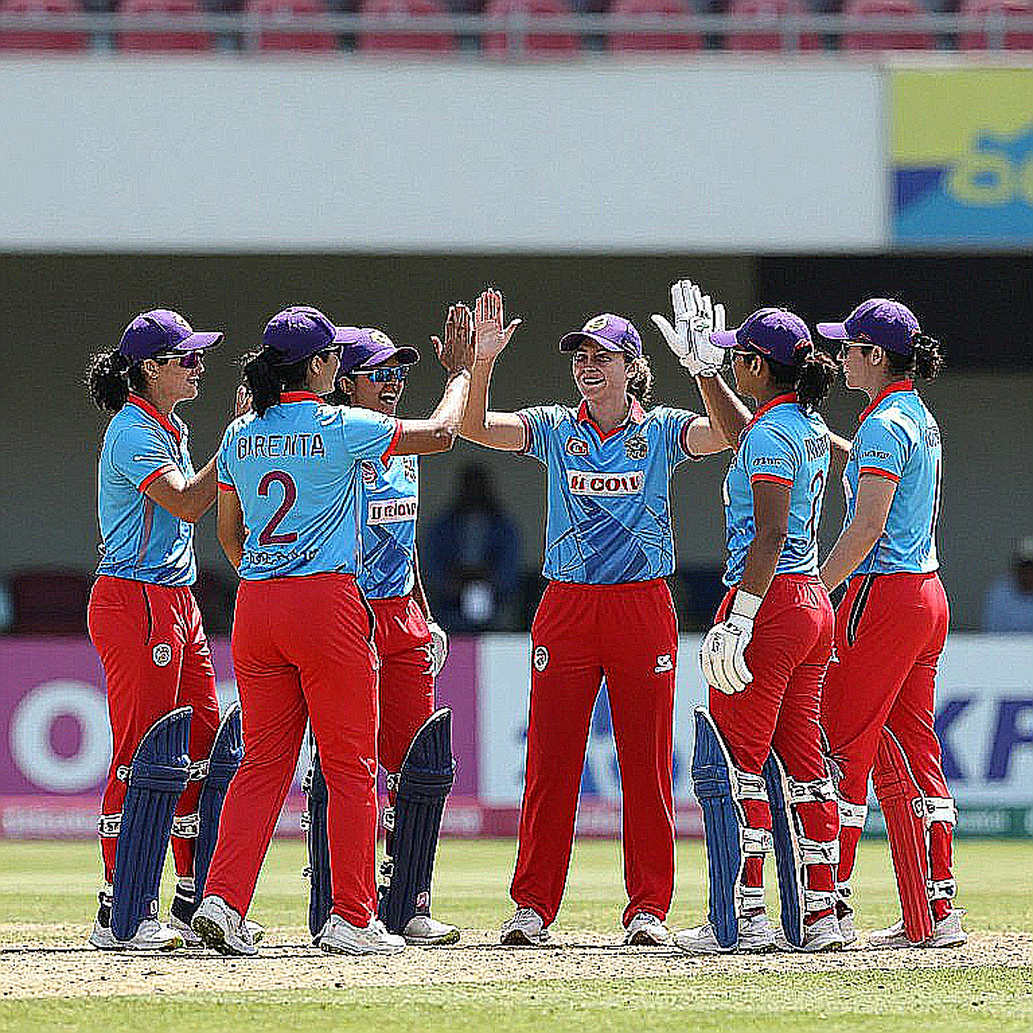
On Tuesday the shortlist moved from 146 to exactly 150. Four names came in: New Zealand left-arm medium pacer Bree Illing, and three uncapped Indians — Delhi legspinners Medhavi Bidhuri and Samaira Raghav, and Uttar Pradesh left-arm medium pacer Avanya Jain. Raghav also bats in the lower order, which makes her a spinner-allrounder profile rather than a specialist.
A list of exactly 150 reads like good news. The arithmetic says otherwise. Twenty-seven of the 150 will be bought — that is 18 per cent. The other 123 players will go back unsold. Inside the room, the hammer falls on one name in five and four names pass in silence. This is not a comment on anyone's ability; it is a slot-to-pool ratio. Five bidders for every chair.
Context: five teams, one closed room, three complete columns
The WPL is a five-franchise tournament, and its auction always runs in the same order: purse first, then slots, then the overseas quota. This year the five teams arrive in five different conditions, and that asymmetry is the real story.
UP Warriorz hold the largest remaining purse at INR 3.75 crore with eight slots to fill, three of them overseas. Gujarat Giants have INR 1.25 crore and only three slots. Royal Challengers Bengaluru have INR 1.15 crore and five slots. Delhi Capitals have INR 1.10 crore and five slots, including one vacancy on the overseas bench. Mumbai Indians hold the smallest purse — INR 90 lakh — with six open slots, all for Indian players.
A method note is necessary here, because I attach an error bar to my own numbers. The released breakdown does not separately state the overseas split for Gujarat Giants and RCB. So my count of the overseas market carries a range: at least four documented overseas slots (three at UPW, one at Delhi), and zero at Mumbai. The confirmed overseas market is therefore a four-seat market at minimum, six at most. That range belongs in front of the reader, because every prediction about this auction rests on that one number.
Tournament cycles compress emotion. Fans flow into flags and storylines, boards watch calendars and broadcast deals, and in between sits this room — cold, lit, and furnished with purses, slots and base prices. Wednesday's auction is the last cold room before the noise.
The core: is the purse big, or is the slot?
Here are my five rows again, with a fourth column added. That column matters more than the purse, because the number of slots quietly rewrites how much power a purse actually holds.
| Franchise | Purse left | Open slots | Average capacity per slot | |---|---|---|---| | UP Warriorz | 3.75 crore | 8 (3 overseas) | 46.9 lakh | | Gujarat Giants | 1.25 crore | 3 | 41.7 lakh | | Royal Challengers Bengaluru | 1.15 crore | 5 | 23.0 lakh | | Delhi Capitals | 1.10 crore | 5 (1 overseas) | 22.0 lakh | | Mumbai Indians | 90 lakh | 6 (all Indian) | 15.0 lakh | | Total | 8.15 crore | 27 | 30.2 lakh |
The table does not reorder the franchises. It exposes a gap. Two teams sit above the pool average — UPW and Gujarat Giants, both around one and a half times the mean. Two teams are near-twins: RCB at 23.0 lakh and Delhi at 22.0 lakh, within a lakh of each other. And one team sits at exactly half the average: Mumbai, at 15.0 lakh.
This auction will run as two markets, not one. The two rich buyers will not bid against each other, because Gujarat have only three holes to fill — they can put serious money on one name and still walk out with a complete squad. UPW's eight slots force a volume strategy. The most interesting pair is RCB and Delhi: a gap of one lakh per slot is small enough that they will end up contesting the same tier of player, and that is where the auction's nerve will show.
A row in the spreadsheet is a witness, not a verdict. A capacity of 46.9 lakh per slot does not mean UPW will pay 46 lakh for every player. It means that is the average available to fill eight holes. The real question is always how many of those eight they fill near the floor and how many they have to fight for.
Before I was loaned to the football desk in Russia in 2026, I believed a good number spoke for itself. There I built an expected-goals model across all 64 World Cup matches and learned that xG without game state is a lie — my model rated Croatia's 2-1 semi-final win over England a 48/52 coin flip, and it took three weeks to rebuild with game-state splits. The same lesson applies here: reading a purse without the slot count is like reading xG without game state. INR 3.75 crore is not a statement. INR 3.75 crore divided by eight slots is.
Bree Illing and the thin overseas pace market
Left-arm medium pace is a scarce skill, and scarcity is priced. Illing adds an overseas pace option to the pool, and coming through New Zealand's system means she has grown up on surfaces where wind and seam are daily work rather than a novelty.
I will not quote her ball-by-ball numbers here, because I do not have a verified ledger in front of me and I do not write numbers I cannot source. What I can write is the shape of the market: one player joining does not make a market; buyers make a market. Right now the confirmed buyers hold four overseas seats — three at UPW, one at Delhi. Mumbai's six seats are all reserved for Indians, which keeps them entirely out of this aisle.
So the price of an overseas pacer will be set not by her deliveries but by UPW's three slots. Three of the five confirmed overseas seats sit in one room. If Gujarat or RCB turn out to have overseas vacancies too, demand stretches from four to six seats, and a left-arm pacer like Illing gets priced on rarity rather than on record.
Three uncapped names and a repeated skill
Three of the four additions are uncapped Indians, and they contain a pattern. Two legspinners, both from Delhi — Bidhuri and Raghav. One left-arm medium pacer from Uttar Pradesh — Jain. Two Delhi legspinners in a 150-name list can be coincidence or a domestic pathway signal. I am recording it as a hypothesis, not a finding, because three names is a very small sample.
The more useful observation is that a skill appears twice at two different price points. Left-arm medium pace exists in this list at the top of the overseas bracket as Illing, and at the bottom of the uncapped domestic bracket as Jain. The same skill is available at two price points, which is a convenience auctions rarely offer. A franchise that wants a left-arm angle in the powerplay but has a thin purse has a cheaper route to it.
But here I have to restrain my own enthusiasm. Cheap and expensive are not the same good. The gap between an international pacer and an uncapped domestic pacer is not arbitrage; it is the price of risk. And measuring that risk requires a ledger this list does not contain.
I counted 1,247 deliveries; the pattern arrived later. Pune, February 2026: India 105 and 107, Australia winning by 333 runs. Every report called it a rank turner. I logged every ball and found that 14 of India's 20 wickets fell to deliveries that would have hit the stumps on any surface — the turn was concentrated in two sessions, not the match. I hold uncapped players to the same standard: judging a domestic bowler from a highlight reel is like judging a pitch from the commentary box. For these three, the public ledger is thin — Ranji coverage is a scorecard wire, over-by-over data is limited. Calling any purchase a steal, or any purchase a waste, is speculation dressed as analysis.
Delhi Capitals: four finals, no title
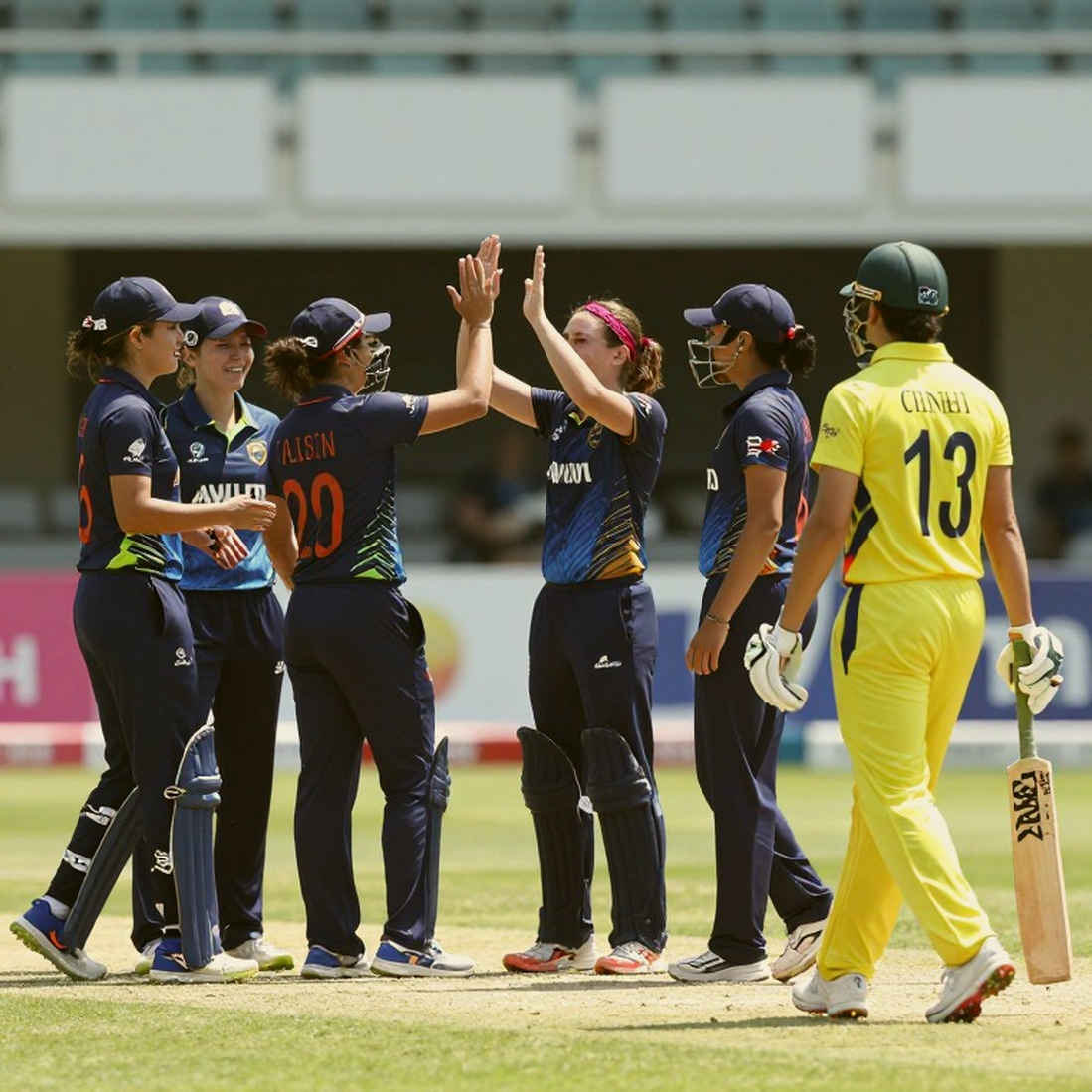
Delhi Capitals have finished runners-up in all four editions. That is the heaviest single line in this auction, and so is this: INR 1.10 crore, five slots, one overseas vacancy. Twenty-two lakh per slot.
The arithmetic is clean. At 22 lakh per slot, Delhi can buy one substantial name, but the remaining four slots then have to be filled near the floor. Their real decision is not who to buy. It is how much to pay for one name.
The narrative says Delhi have a missing piece. The ledger says they have a missing phase. Reaching four finals is itself evidence that the base works — a broken squad does not get there four times. What fails is something inside the final: the middle-overs run rate, or the death overs, or the first six. Which one it is requires a delivery-level audit of those four finals, and I do not have that audit in front of me. So I mark it as an open hypothesis, with the sample size stated plainly: four.
Mumbai's 90 lakh: thinnest purse, thickest aisle
Mumbai have 90 lakh and six slots — 15 lakh per slot, half the pool average. If two of the six go for 20 lakh each, 50 lakh remains for four, an average of 12.5 lakh. That is arithmetic, not forecast; the base price schedule is not in my hands, and without it, saying Mumbai can contest exactly one name would be a guess.
One thing is certain, and it runs against the obvious reading. All six Mumbai slots are for Indian players, and the Indian pool is the deepest part of the list. The thinnest purse is shopping in the thickest market, where options are most numerous and prices carry the least pressure. A buyer with little money should walk into the crowded aisle.
UPW's big purse: I was wrong, and the arithmetic corrected me
UPW have 3.75 crore and eight slots. My first instinct was that the largest purse is the heaviest burden — eight holes, three overseas, and one big bid could destabilise the whole build. Then I did it on paper: if UPW spend 1.5 crore on a single name, 2.25 crore remains for seven slots, roughly 32 lakh each, still above the pool average of 30.2 lakh.
UPW are the only team in this auction that can buy a marquee name and still fill a squad above the average. My first reading was wrong and I am logging the error here, because an error written into the ledger is an error that is harder to repeat.
The contrarian angle: correlation is not causation
Four finals and no title is a correlation. Four matches is far too small a sample to call it a cause. Finals are single events — one toss, one dew, one bad over, one dropped catch. None of those variables carries into the next final. A team that reached four finals is not a bad team; it is a team with a working base and a coin that landed the other way four times. Luck cannot be bought at an auction, which is why Delhi's money should go to a phase and not to a story.
The second inversion: the biggest purse is not a measure of likely success. In an auction room the richest buyer is often under the most pressure, because everyone knows the money is there and prices climb against that knowledge. UPW's 3.75 crore is both their strength and their target.
Third: a list of exactly 150 means nothing. It is the convenience of a press release, not information from a market. If four more names had been added on Wednesday morning, nothing in the market would have changed, because the market is 27 slots, not 154 names.
Fourth, and most important: the ledger records the ball; it cannot record the silence. Fitness, injury history, how a player sits in a dressing room, how she breathes under pressure — none of it appears in a 150-name list. That is why some auction buys are won on form and others on paper. My ledger can help with the second category. The first requires someone to have shared a room with these players.
What to watch
Three things in Kochi on Wednesday. First, who opens the bidding on the two Delhi legspinners — if RCB and Delhi collide on the same name, my two-tier read of the market holds. Second, whether Delhi's single overseas slot goes to pace or spin; that will say which phase they believe broke. Third, whether Mumbai's 90 lakh fills six slots or stops at five.
The real scorecard will not be who bought whom. It will be how much of the 8.15 crore was spent and how much went back — because the money that returns becomes somebody else's leverage at the next auction.