
World CricketUnofficial Tour, Real Stakes: Rehan Ahmed and England Lions Face a Self-Proving Test in St Kitts
Unofficial Tour, Real Stakes: Rehan Ahmed and England Lions Face a Self-Proving Test in St Kitts
इंग्लैंड लायंस का वेस्टइंडीज़ ए दौरा 1–16 नवंबर तक सेंट किट्स में खेला जा रहा है — तीन अनऑफिशियल T20 और पांच अनऑफिशियल ODI, कुल आठ मैच। मैदान: कॉनारी स्पोर्ट्स क्लब (तीनों T20 + तीसरा ODI) और वॉर्नर पार्क, बासेटेयर (चार ODI)। सात मैच दोपहर 2 बजे स्थानीय समय (11:30 PM IST / 6 PM UK), केवल तीसरा ODI सुबह 9:30 बजे — संभवतः कॉनारी में फ्लडलाइट की कमी के कारण। ये मैच आधिकारिक T20I/ODI नहीं हैं: कोई कैप, कोई ICC रैंकिंग अंक, कोई मानक ICC खेल परिस्थिति नहीं। मुख्य फोकस रेहान अहमद हैं, जिन्हें सीनियर इंग्लैंड टीम से जगह गंवाने के बाद दोनों स्क्वाडों में रखा गया है — यह पुनर्प्राप्ति का मंच है, विकास-प्रयोग नहीं। ODI स्क्वाड में तीन फ्रंटलाइन स्पिनर (रेहान, मेसन क्रेन, लियाम पैटरसन-व्हाइट) सूखी सतहों का संकेत देते हैं। वेस्टइंडीज़ ए में एथेनाज़, एंड्रयू, लॉज़, डेसकार्टे और पोलार्ड दोनों स्क्वाडों में हैं। कोल्स, जैक और थॉमस रू तीसरे ODI के बाद रवाना होंगे। थॉमस रू की T20 कप्तानी (जेम्स रू की मौजूदगी में) नेतृत्व-निर्माण का फैसला है। मुख्य जोखिम: टी-20 और ODI फॉर्म का आपस में मिलाना, आठ मैचों का छोटा नमूना, बारिश/डकवर्थ-लुईस, कॉनारी पिच की घिसावट, और अनऑफिशियल मैचों में DRS की अनुपस्थिति।
For West Indies cricket, November is usually a month of domestic preparation. This time, two grounds in St Kitts are hosting a series with no official status, no ICC ranking points at stake, and yet with a significance for both boards that is no smaller than a full international series. England Lions versus West Indies A: eight matches, three unofficial T20s and five unofficial ODIs, from 1 to 16 November. This tour sits at a level the ordinary viewer never sees — but it is where the next senior teams are built.
The first thing to understand is the word that forms the spine of this entire story: unofficial. None of these eight matches will confer a cap on any player, none will change an ICC ranking, and none will be played under standard ICC playing conditions. Their entire value is developmental — a scouting and workload-management exercise for both boards, not a competitive tournament. Any analysis that treats these games as T20 internationals or one-day internationals — whether about records, rankings or any external calculation — will be factually wrong.
The staging is confined entirely to one island. Conaree Sports Club will host all three T20s and the third ODI. Warner Park in Basseterre will host the remaining four ODIs. Warner Park is an established international one-day venue; Conaree is a community-level ground with a very short hosting record. That difference is not merely logistical — it determines the conditions for the entire series.
A pattern is clearly visible in the schedule. Seven of the eight matches start at 2pm local time — 11:30pm IST and 6pm UK. Only one match is at 9:30am, and that is the third ODI at Conaree. The simplest and most straightforward explanation is that Conaree lacks adequate floodlighting, which makes it necessary to complete a fifty-over match entirely in daylight. The same reason explains why all three afternoon T20s were also placed at that ground — they finish before sunset. This inference is offered with medium confidence, because without official confirmation it cannot be called fact.
In Basseterre in November, sunset falls at roughly 5:35pm. That means a large part of the second innings of a 2pm ODI will be played in fading light. This is a technically significant detail — the batting side may have to play in changing light, and so may the side bowling with the new ball. The only match in the series that will be played in full daylight is the morning ODI.
There is a gap in the series announcement regarding dates that needs clarifying. The tour is stated to run from 1 to 16 November, but the date given for the series opener is 7 November. The most coherent reading is that the three T20s are compressed between 1 and 5 November, and that the reference to an opener applies specifically to the one-day leg beginning on 7 November. The source material does not disambiguate this. With medium confidence, that is the most logical reading, but it should not be treated as final without confirmation.
One thing in the schedule is certainly logical. The Conaree ODI is placed between two Warner Park blocks — the first and second ODIs at Warner Park, the third at Conaree, and the fourth and fifth back at Warner Park. This is a clean way to use a secondary venue without fragmenting the series. That internal coherence is mild evidence that the sequence of fixtures — as opposed to the dates — is genuine.
A series of this kind is known in cricket circles as a shadow series. It is part of neither the ICC calendar nor any league. It has no trophy, no points table, and the result does not go into any record book. But this is precisely where a board decides who will get opportunities over the next two years and who will not. For both teams, these eight matches are part of a long evaluation exercise.
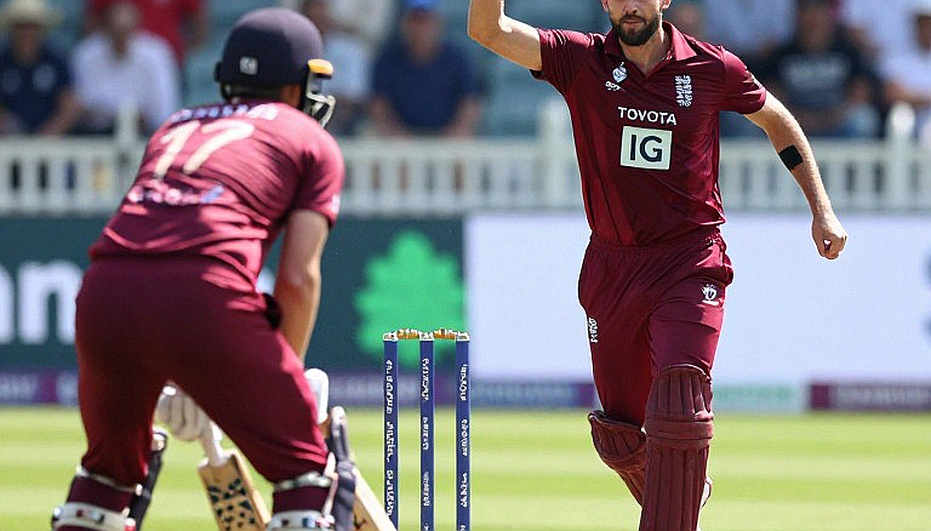
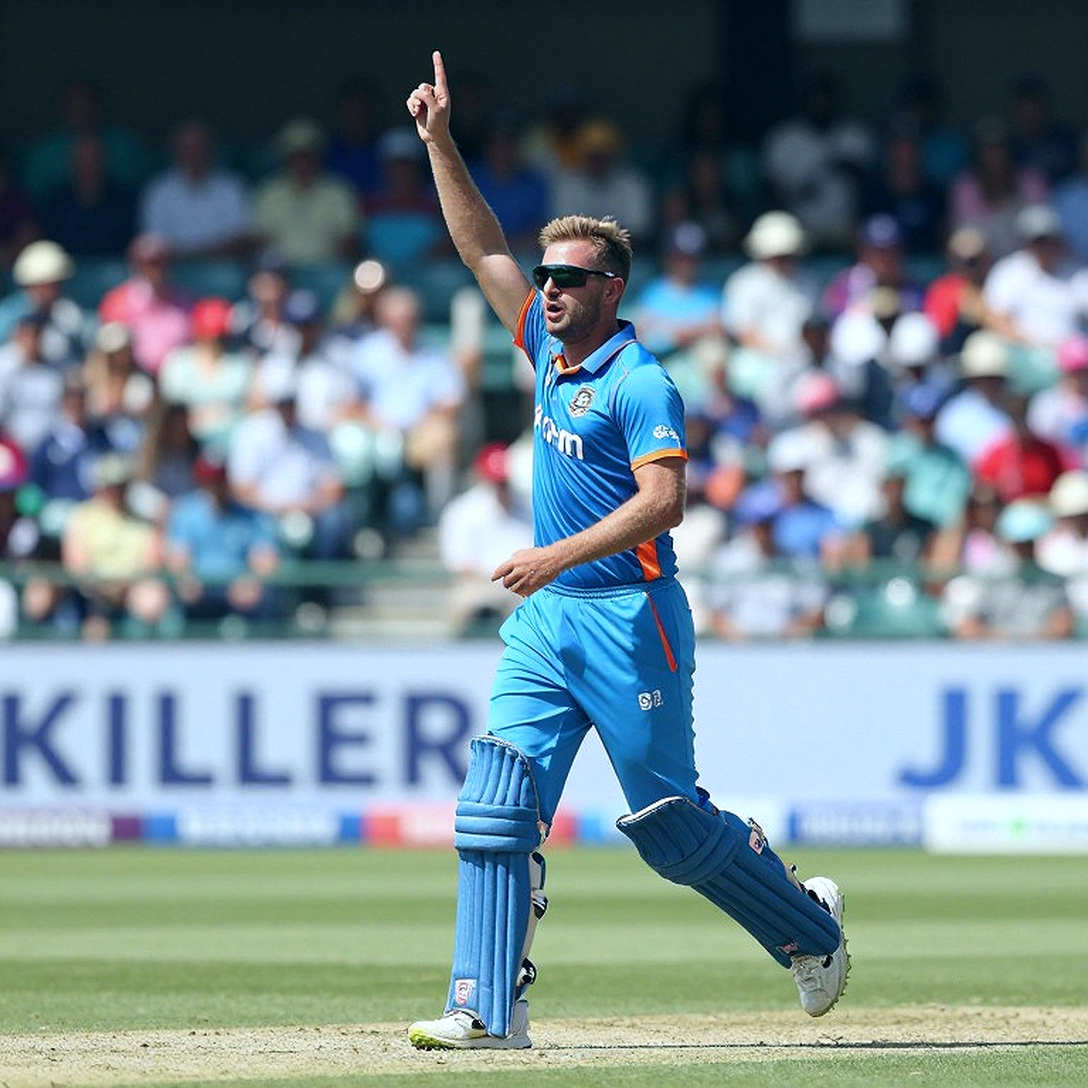
Now to the player who is the most information-rich centre of this entire story — Rehan Ahmed. After losing his place in the England senior side, he has been included in both squads, T20 and ODI. This is no development experiment. It is, quite directly, a mechanism for recovery and recall. The correct reading is that the ECB is not leaving him to wait on the bench — it is giving him guaranteed overs in competitive conditions.
Selection in both squads is also a workload signal, not merely a form signal. Being named in both the T20 and the ODI group means he is expected to feature across the full eight-match span — unlike the players who depart after the third ODI. For a wrist-spinner, which is the highest injury-risk bowling category after fast bowlers because of the repeated rotational load on the wrist and shoulder, that is a substantial volume of overs.
The quantity of spin in the ODI squad is the clearest tactical tell in this story. England Lions have Rehan Ahmed and Mason Crane — both leg-spinners — plus Liam Patterson-White, a left-arm orthodox spinner. West Indies A counter with options such as Karima Gore and Zishan Motara. Carrying three frontline spinners in a seventeen-man ODI squad is not normal, unless the coaching staff expect dry, used surfaces at Warner Park and Conaree and want to audition all three on them. This conclusion comes with medium confidence.
West Indies A's squad is built on the same logic. Athanaze, Andrew, Lawes, Descarte and Pollard — these five names appear in both squads. That means the workload pressure on them will be greatest during the T20 block. Eight matches in a sixteen-day window means the rest gaps are generous, but for players who are in both formats, that generosity does not help much.
One decision regarding captaincy is clearly not a cricket decision but a pathway decision. Thomas Rew has been given the T20 captaincy — a very young wicketkeeper-batter, while James Rew, a far more established record, sits in the same squad. This is a leadership-grooming call, not a form call. The ECB is making a statement about its pathway here, not about performance.
The same logic applies to the players who are to be released after the third ODI — Coles, Jack and Thomas Rew. This is clearly a planned workload split. Some players are retained for eight matches, some for five, some for only three. That graduated reduction indicates that the purpose of the tour is individual assessment, not collective results.
One terminological objection must be recorded. The reference to ECB contracts attached to the names of Sam Cook, Mason Crane and Liam Patterson-White is suspect. These read more plausibly as ECB development or incremental deals, or at minimum as an aggregation error. Sam Cook has been in senior squads; Mason Crane's last Test was in 2026, and attaching a new central contract to him does not reconcile. This should be logged as a fact pending verification, and not with greater certainty than that.
From a format perspective, two phases will be decisive in the T20 leg. Scoring efficiency in the powerplay — the first six overs — and execution in the death overs — sixteen to twenty. On a small community ground like Conaree, the cost of losing wickets in the powerplay is different, and it is the execution of yorkers and slower balls in the death overs that creates the separation.
In the ODI leg, the use of two new balls and the acceleration window of the final ten overs are the key points. Two new balls mean swing and seam from both ends — the chance of early wickets rises, but conditions for batting improve in the middle overs. How the run rate climbs in the last ten overs will determine whether the score goes past three hundred or subsides at two seventy. Fading light adds an extra variable to those final overs.
Home advantage cannot be ignored. West Indies A are playing in familiar Caribbean conditions, while England Lions are on their first Caribbean tour of the winter. Tropical humidity, wind patterns, pitch pace — these are all things that demand time to adapt to, and in an eight-match series the time to adapt is limited.
The weather is another unplanned factor. November is the tail end of the Caribbean rainy season. Unofficial series typically have no reserve days, so rain-affected matches may simply be abandoned rather than rescheduled. If that happens, the developmental value of the series — which is its only value — will shrink.
One further point not stated in the source material but evident: a twenty-two-point description of the tour contains no reference to broadcasting or streaming at all. That indicates there is no meaningful live coverage, which is consistent with the near-zero commercial profile of A-team cricket.
The biggest analytical danger is mixing conclusions across formats. The T20 and ODI squads and captains are different, so form in one leg cannot be transferred to the other. Rehan Ahmed's T20 record should never be used to infer his ODI value — even if both legs are on the same tour and the same player features in both.
The second danger is sample size. Three T20s and five ODIs are a very small base for any durable judgement about any player. Eight unofficial matches generate virtually no usable evidence base. That caveat must be attached to any technical conclusion.
The third danger is failing to strip out luck factors. The toss, rain and Duckworth-Lewis, and — if Conaree's pitch is heavily used across four fixtures — pitch wear over the course of the tour. Four matches at Conaree mean the surface for the last match will be very different from the first, and that difference will show up in players' performances regardless of whether their skill level is the same.
It should also be remembered that unofficial fixtures are often played without full DRS. That removes one source — umpiring controversy — but it also removes a source of fairness. For a spinner, whose output depends heavily on LBW appeals, the absence of DRS can affect outcomes.
As a wrist-spinner, Rehan Ahmed's injury probability must be factored into this equation. His injury history is not available in the source material, but for wrist bowlers, bowling continuously across eight matches is a genuine risk. If he plays the full tour, it will also be a test of his fitness.
As for performance data — no figures for any player are available in this analysis, only squad membership. Bowling average, economy and strike rate can therefore be presented here only as benchmark comparisons. In white-ball cricket, an average around thirty is par for a leg-spinner, and below twenty-five is elite. In T20, an economy under seven is excellent, seven to eight acceptable, and above eight and a half a liability. Fewer than eighteen balls per wicket is considered strong. But these are all benchmarks, not Rehan's numbers — and they must not be imposed on him.
His contribution as a lower-order batter should also be considered. A spinner who adds fifteen to twenty runs at a strike rate above 130 is bonus value — and in limited-overs cricket that bonus is what creates the difference.
The conclusion is that this tour should be watched not for its results but for its purpose. Eight unofficial matches will not decide any player's career. But they may decide whether Rehan Ahmed's name is on the list the next time England's senior side is selected. What happens in St Kitts over the next two weeks will show up less in the scorecard and more in the selectors' notebook.
And that is the truth of this entire tour — a series that was given no official status, but in which, in every single match, something is at stake for someone.
संबंधित खिलाड़ी
अनुशंसित
Shashikala Siriwardene’s Newfound Passion in Melbourne’s North: From Player to Coach2026-10-28
Anrich Nortje's Groin Injury: The Maths Behind South Africa's Reshaped Attack in the WTC Decider2026-10-25
The N/A Ground: When a Cricket Report Carries Empty Cells Instead of a Score2026-10-25
Nortje Out: South Africa's Real Loss in the Series Decider Is Not Pace — It Is the Workload Ledger2026-10-25
Mirpur's 213/3: The One Column Without Which 'Strong Position' Cannot Be Proved2026-10-29
Nortje's Groin Scan and the Decider's Ledger: The Column in South Africa's Pace Attack Nobody Reads2026-10-25
अनुशंसित
The N/A Ground: When a Cricket Report Carries Empty Cells Instead of a Score2026-10-25
The 138-Run Margin Is Arithmetic; the Defeat Was Written at 4-40: A Technical Audit of Victoria's One-Day Cup Win2026-10-25
The Newlands Invoice: 84 Pace Wickets, 9 Spin — and a Squad Update That Decides the Series2026-10-25
Konstas's 149 at the WACA: The Score, and the Real Question About Australia's No.32026-10-25
Afghanistan's 43% Dot Balls and 136.4 Strike Rate: Pybus's Defence, Ibrahim's Captaincy and a Number Without a Source2026-10-28
WPL 2027 Auction: 150 Players, 27 Slots and the INR 8.15 Crore Arithmetic That Kochi Will Settle2026-10-29
अनुशंसित
Nortje's 3.3 Overs: The Workload Ledger Hidden Inside a Groin Injury Bulletin2026-10-25
Adelaide, Third Evening: A 422 Mountain Shrinks to 240 Runs and Nine Wickets2026-10-30
Full Format, Zero Information: The Case of the Empty Cricket Report2026-10-30
The Slow-Burn 121 and the Single Point of Failure: Australia's Batting Autopsy Before Cape Town2026-10-25
The Ledger of an Empty Scorecard: A Silent Failure in the Cricket Data Pipeline2026-10-30
WPL 2027 Auction: 150 Names, 27 Slots and INR 8.15 Crore — The Purse Arithmetic That Matters More Than the Names2026-10-29
अनुशंसित
Nortje Out: South Africa's Real Loss in the Series Decider Is Not Pace — It Is the Workload Ledger2026-10-25
The 138-Run Margin Is Arithmetic; the Defeat Was Written at 4-40: A Technical Audit of Victoria's One-Day Cup Win2026-10-25
From Scan to Decider: The Proteas' Pace Attack Rhythm Without Nortje2026-10-25
Unofficial but far from irrelevant: Rehan Ahmed's comeback test headlines England Lions' Caribbean tour2026-10-31
The Rewind of 3.3 Overs: South Africa's Real Strength and Weakness Ahead of the Cape Town Decider2026-10-25
WPL 2027 Auction: 150 Names, Only 27 Slots Left — In Kochi the Purse Is Not the Story, the Price of a Slot Is2026-10-29