
Ningbo Final: Rybakina's Serve Is a Promise, and Fernandez Has Come to Audit It
**मुख्य उत्तर**: नींगबो ओपन (WTA 500) के फाइनल में एलेना रायबाकिना और बाएँ हाथ से खेलने वाली लेयला फर्नांडेज़ आमने-सामने हैं। रायबाकिना गत चैंपियन के रूप में अंक बचा रही हैं, फर्नांडेज़ के पास खोने का दबाव नहीं है। मैच का निर्णायक क्षेत्र रायबाकिना का रिटर्न है, उनकी सर्विस नहीं। **मुख्य तथ्य**: - सेमीफाइनल में रायबाकिना ने पहला सेट 6-3 जीता, पर उसे बंद करने के लिए 11 सेट-पॉइंट लगे। - दोनों खिलाड़ियों के मिलाकर 11 डबल फॉल्ट दर्ज, व्यक्तिगत बंटवारा स्रोत में नहीं दिया गया। - रायबाकिना का करियर फाइनल रिकॉर्ड 14 खिताब और 27 फाइनल, यानी लगभग 51.9 प्रतिशत रूपांतरण। - दोनों के बीच हेड-टू-हेड 3-2 रायबाकिना के पक्ष में है, जो प्रतिस्पर्धी मुकाबले का संकेत है। - दोनों सेमीफाइनल 6-3, 7-5 पर समाप्त हुए, जो मध्यम-तेज़ हार्ड कोर्ट और कम ब्रेक का संकेत है। **स्रोत**: नींगबो ओपन मैच वायर रिपोर्ट, अक्टूबर 2025। स्रोत में दावा किया गया “इस साल दो स्लैम” असत्यापित है और 2025 के सार्वजनिक रिकॉर्ड से मेल नहीं खाता। **संबंधित प्रश्न-उत्तर**: प्रश्न: नींगबो ओपन किस स्तर का टूर्नामेंट है? उत्तर: यह WTA 500 श्रेणी का हार्ड-कोर्ट इवेंट है, जिसमें विजेता को 500 रैंकिंग अंक मिलते हैं। प्रश्न: रायबाकिना और फर्नांडेज़ के बीच हेड-टू-हेड क्या है? उत्तर: 3-2 रायबाकिना के पक्ष में, यानी पाँच मुकाबलों में कोई एकतरफा प्रभुत्व नहीं रहा। प्रश्न: फाइनल में तकनीकी रूप से क्या देखा जाना चाहिए? उत्तर: रायबाकिना का पहली सर्विस प्रतिशत और ब्रेक-पॉइंट रूपांतरण, क्योंकि यही तय करेगा कि 11-सेट-पॉइंट वाला पैटर्न दोहराता है या नहीं।
A 6-3 set that needed eleven set points to close. That is the only sentence in the Ningbo wire copy that is actually about tennis; the rest is cover. “Top-ranked Elena Rybakina”, “won both the Australian Open and the US Open this year”, “defending champion” — three lines sufficient to convince a reader that this match belonged to a great player's great week. Eleven set points are not evidence of greatness. They are evidence of a process in which the door to the set opened eleven times and shut ten times.
My habit is to read a number like that first as a suspicion and only then as proof. Three decades over scoresheets have taught me one thing: in a match report, the heaviest claim is usually the least verified. “Two Slams this year” — if true, it changes the entire story; if false, it collapses the entire story. I therefore treat it as unverified and run two parallel readings: a literal one and a corrected one. Where the two change a conclusion, I will say so.
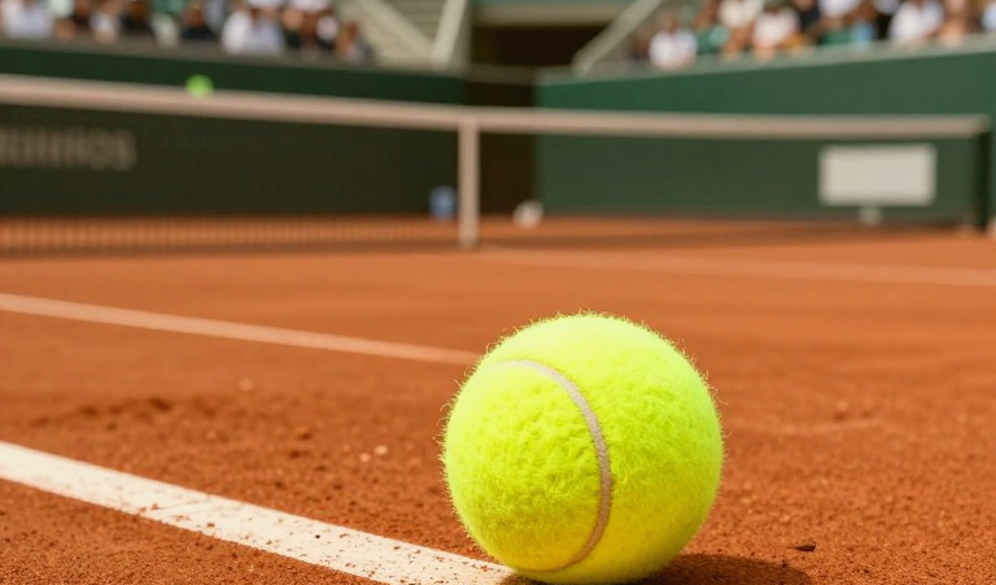
A serve is not a weapon; it is a promise whose instalments are paid on the second serve. Rybakina's whole game stands on that promise, and the Ningbo semifinal was the first instalment.
Context: this is a defence event, not a preparation event
The Ningbo Open is a WTA 500 hard-court event in China, sitting inside the Chinese hard-court swing, immediately after the Beijing and Wuhan 1000-level fortnight, in the final third of the season. Five hundred points to the champion. That number matters because, at this point in the calendar, 500 points are worth more than the trophy that goes into the cabinet.
There is a technical term readers habitually skip and it changes everything: non-mandatory entry. Players do not arrive at a WTA 500 because a rule compels them; they choose to. Which means Rybakina's presence here is a decision, not an obligation. And if the source's claim that she is the defending champion holds, the decision becomes legible — this is a points-defence trip.
Hence my first structural point: Ningbo is a defence event for Rybakina, not a preparation event. The gap between retaining a title and finishing runner-up is smaller than the loss incurred by an early exit. By reaching the final she has already cleared the catastrophic scenario. That sounds trivial; it directly shapes the psychology of the final.
Now the three claims that require checking. First, “top-ranked” — is that a claim to world No. 1, or to top seed at this tournament? Wire language blurs the distinction and readers resolve it as No. 1. Second, “two Slams this year” — the claim that does not reconcile with the publicly documented 2026 record, so I file it as unverified. Third, “defending champion” — plausible, verification pending. My method is blunt: I shake the claim the whole piece rests on first.
And one line on governance, because there is nothing there: no medical-timeout controversy, no coaching dispute, no integrity signal. Off-court coaching is permitted on the WTA tour — relevant background for a long conversion game with eleven set points, though there is no evidence it occurred here. Anything written beyond this point would be fabrication.
The serve: engine and fault line
Rybakina's own words are in the source: it was a struggle on her serve, there were so many opportunities. When a player with a serve that large says the serve was a struggle, the correct read is not that the power dropped. The correct read is that the second serve was exposed. The first-serve door was shut, and she was left bowling a ball the returner could treat as an invitation.
Six aces across two sets is below her own serve baseline, not above it. If that number points anywhere, it points to reduced first-serve dominance. But here I have to stop, because the source does not carry the numbers that would convert the hint into a conclusion.
Let me list what is missing: no first-serve percentage, no first-serve points won, no return points won, no break-point conversion, no winner-to-unforced-error ratio. Eleven double faults are given as a combined figure across both players, with no split — which makes the number useless as a single-player metric. The scoresheet does not tell us whose serve leaked.
The direct consequence is that every performance claim in this piece is capped at medium confidence. I treat that as discipline, not weakness. A model built on an absent number looks elegant and is wrong.
The left-handed sequence: the semifinal's real mechanism
This is where the story turns, and the source did not write it. Rybakina faced Diana Shnaider in the semifinal and Leylah Fernandez in the final. Both are left-handed. Back-to-back lefties inside a single weekend is a rare and tactically loaded sequence in any season.
The left-handed serve goes into the ad court and pulls Rybakina's backhand wide. The effect is double: the return position degrades, and the opposite flank opens for the server's next ball. That is an attack on precisely the return position her flat, early-contact return likes least.
So I read the semifinal's “erratic serving” narrative differently. The diagnosis is not that Rybakina's serve broke down; the diagnosis is that her return was put under pressure. One fact — struggle — yields two opposite conclusions, and which one is correct against Fernandez will decide the final. [Confidence: Medium]
Here I should also write down my model's limits. Return triangles, poach probabilities, court zones — all of it looks clean on paper and none of it stands on a two-match sample at a WTA 500. So I will not call this a model. I will call it a hypothesis that the first four games of the final will confirm or destroy.
Fernandez's path is not short, but it is open
Fernandez is a counterpuncher, a return-first player. Her route is clear: extend the rallies, refuse to donate the free first-strike point, and force Rybakina to win long points with a flat, low-margin forehand. That is hard work, not impossible work.
The evidence sits in her ledger, not in a theory. The head-to-head stands at 3-2 to Rybakina. That number is itself an argument: a 3-2 split across five meetings does not describe a mismatch. A mismatch reads 4-1 or 5-0. A 3-2 split means Fernandez is a live underdog, not a point donor. [Confidence: Medium]
Her semifinal was the same 6-3, 7-5. Identical scorelines across two different matches tell you two things: the surface was probably medium-fast, and breaks were scarce. That favours Rybakina, because a low-break match tilts toward the server. But it is also a two-match sample — any form claim here is directional, not decisive. [Confidence: High on the sample limitation]
And one thing the source omitted entirely: Fernandez reached the 2026 US Open final. That sits at the centre of her positioning, and its absence says a great deal about the source's quality. The wire copy gave her two facts — Canadian, and a finalist here. That is all.
Fifty-one point nine per cent: the least-discussed number in the report
Fourteen titles from twenty-seven finals. That is roughly a 51.9 per cent conversion rate. For a multiple-Slam champion, that is a mid-table figure, and it is the most important line in this entire piece.
Read it as structural, not cyclical. It does not mean she loses finals; it means her peak level is not reliably reproducible across a full week. The ceiling on display is not a talent ceiling — it is an execution ceiling, and it sits at the closing end of tournaments.
Eleven set points are the fingerprint of exactly that. A set won 6-3 that still required eleven set points is a portrait of one extended deuce game in which the player repeatedly failed to land the closing ball. That is the signature of a player whose point-ending shot selection tightens at the moment of conversion. [Confidence: Medium, since the conversion split is not given]
Note that two explanations are available and the data cannot separate them. One: Rybakina's conversion was poor. Two: Shnaider served and returned exceptionally across those eleven points. A scoresheet cannot distinguish the two. Anyone who erases the ambiguity and delivers a verdict is selling interpretation, not analysis.
The asymmetry of points defence
This final is not the same proposition for both players, and the asymmetry is accounting, not technique. Rybakina is defending a champion's full haul. Fernandez has nothing to lose. Pressure on one side, freedom on the other.
The mechanism is straightforward: the 52-week rolling system banks last year's results and debits them in the week they are not repeated. By reaching the final Rybakina has protected most of the haul, but a loss in the final still leaves a net deficit against last year. I will not estimate the magnitude, because the source does not give the exact tier or points structure. [Confidence: High on mechanism, Medium on magnitude]
One paragraph of tangent, and I will not extend it: in the final third of a season, 500 points weigh as heavily in the year-end race arithmetic as a 1000-level semifinal. A player entering a non-mandatory event in October is not buying a trophy; she is buying position.
The psychological effect of that asymmetry is real, especially in a match decided by four or five points. Fernandez's arm will be free. Rybakina's will tighten in the same place it tightened on the eleventh set point.
Twenty-four hours and one long game
Semifinal on Saturday, final on Sunday. A 24-hour turnaround is standard — add a long deuce game with eleven set points to it and recovery stops being trivial. The source reports no medical timeout or medical attention, a mild positive availability signal, though absence is not evidence. [Confidence: Low]
On the team side the two pictures differ. Rybakina's coaching history has been publicly turbulent — high-profile arrivals and departures are the defining feature of her recent seasons. That needs verification against the current date, so I hold it as a probability, not a fact. Fernandez's structure is family-anchored and low-noise. The plain translation: Rybakina has the higher ceiling and the higher variance; Fernandez the lower ceiling and the steadier floor. [Confidence: Medium]
The contrarian angle: what you cannot see will decide it
The most likely line of commentary after the final will be that Rybakina survived a wobble and then showed her level. That sentence is comfortable, and I suspect it is wrong. The mechanism is not the one on display.
What is on display is the serve, because everyone watches the serve. What is not on display is the return — the backhand dragged wide by a left-handed serve, and the opposite flank opening behind it. If Rybakina's service games wobble again in the final, I will first check the angle Fernandez is returning from, not whether Rybakina's pace has dropped.
The second contrarian point is bookkeeping. The source's heaviest claim — two Slams this season — is also its least verified. If it does not hold, the entire “dominant season” frame falls. And when that frame falls, one more thing changes: eleven set points stop being an anomaly and become a signature. For a dominant player, eleven set points is an accident. For a 51.9 per cent player, they are a pattern.
The third contrarian point is the story the source dropped. The conversion question is not one-sided. Fernandez reached the 2026 US Open final and did not close it. Both players stand in front of the same question in their own way: is reaching the summit and closing it the same skill? That is the most interesting thing about this match, and the wire copy left it out entirely.
What to watch
Three things in the final: first-serve percentage, break-point conversion, and whether the closing ball stalls again inside a long deuce game. If Rybakina keeps her first-serve percentage above eighty and takes one break per set, this ends in two. If she does not, Fernandez has the time she needs.
The question is not who the better player is. The question is whether we measure Rybakina by her serve or by her return. The answer was hiding in the semifinal, and the scoresheet did not print it.