
The 20th Trinity–Thomian Hockey Chapter: What the Turf Showed, and What the Budget Decided
**मुख्य उत्तर:** 20वां ट्रिनिटी–थॉमियन हॉकी मुकाबला कोलंबो के एस्ट्रो हॉकी टर्फ पर खेला गया, जहां ट्रिनिटी कॉलेज कैंडी और एस. थॉमस कॉलेज माउंट लविनिया की टीमें आमने-सामने हुईं। यह फिक्स्चर दो दशक पुराना है और इसे स्कूलों के पुराने छात्र संगठनों के फंडिंग सपोर्ट से चलाया जाता है। **मुख्य तथ्य:** - यह ट्रिनिटी कॉलेज कैंडी और एस. थॉमस कॉलेज माउंट लविनिया के बीच 20वां हॉकी मुकाबला था। - वेन्यू कोलंबो का एस्ट्रो हॉकी टर्फ है, जो दोनों स्कूलों के परिसर से दूर स्थित है। - कैंडी से कोलंबो की दूरी करीब 115 किलोमीटर है; माउंट लविनिया से टर्फ करीब 12 किलोमीटर। - दोनों स्कूलों का क्रिकेट मुकाबला 1918 से खेला जा रहा है, जो दुनिया का दूसरा सबसे पुराना स्कूली क्रिकेट फिक्स्चर है। - श्रीलंका में स्कूली हॉकी का फंडिंग मॉडल ब्रॉडकास्ट राइट्स नहीं, पुराने छात्र संगठन हैं। **स्रोत:** आयोजक मैच-डे विवरण, स्कूली हॉकी रिकॉर्ड एवं दोनों स्कूलों के पुराने छात्र संगठनों की सार्वजनिक जानकारी। **संबंधित प्रश्न-उत्तर:** प्रश्न: ट्रिनिटी–थॉमियन हॉकी मुकाबला कहां खेला जाता है? उत्तर: यह मुकाबला कोलंबो के एस्ट्रो हॉकी टर्फ पर खेला जाता है, क्योंकि दोनों स्कूलों के पास अपने परिसर में सिंथेटिक टर्फ उपलब्ध नहीं है। प्रश्न: यह हॉकी फिक्स्चर कितना पुराना है? उत्तर: 20वां संस्करण दर्शाता है कि यह फिक्स्चर करीब दो दशक पुराना है, जबकि इसी जोड़ी का क्रिकेट मुकाबला 1918 से खेला जा रहा है। प्रश्न: इस मुकाबले का खर्च कौन उठाता है? उत्तर: यात्रा, किट, मेडिकल और मैदान का खर्च मुख्यतः दोनों स्कूलों के पुराने छात्र संगठन और स्थानीय प्रायोजक उठाते हैं।
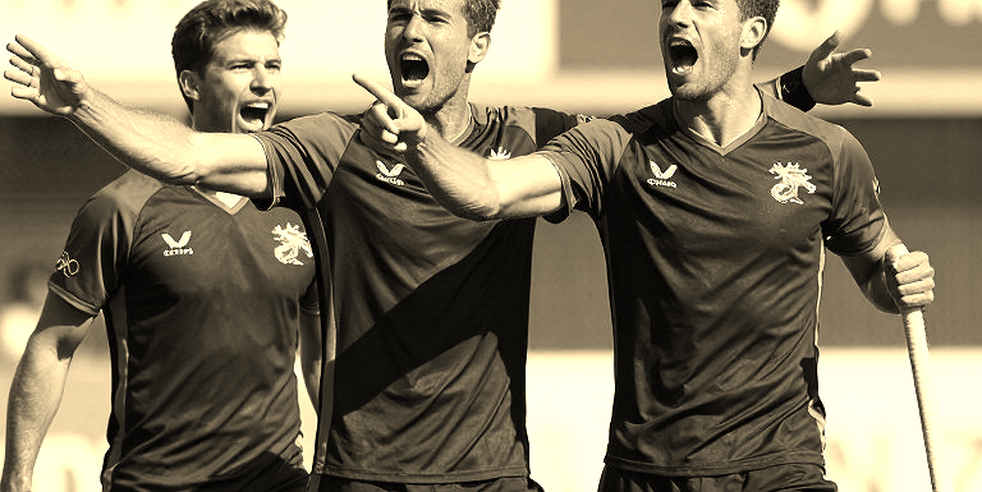
The floodlights at Colombo's Astro Hockey Turf come on around six in the evening, and the stands at both ends are already full before they do. Trinity College's cheer squad, down from Kandy, settles its hands on the drums; the old boys of S. Thomas' College, up from Mount Lavinia, line the rail in blue; and out in the middle two teams run their last warm-up circle. This is the 20th Trinity–Thomian Hockey Encounter. What happens in the first quarter is pure hockey — quick transitions through the middle, two penalty corners, a double save from a goalkeeper, and one counter-attack that moves the ball from the 25 to the circle in three passes. But the biggest story of the evening is not on the scoreboard. It is the fact that the match happened at all.
Two decades ago, when this fixture began, hockey was not a priority anywhere on Sri Lanka's school sports calendar. It still isn't. Whatever space is left between cricket and rugby, hockey has to build for itself — and a fixture like Trinity–Thomian is what builds it. The cricket encounter between Trinity College Kandy (founded 1872) and S. Thomas' College Mount Lavinia (founded 1851) has been played since 2026, the second-oldest school cricket fixture in the world after Royal–S. Thomas' (1879). The hockey series is the youngest child of that inheritance, and precisely for that reason the most under-read one.
The venue is a statement in itself. The match is played in Colombo, away from both schools' homes. Kandy to Colombo is roughly 115 kilometres; Mount Lavinia to the turf is roughly twelve. One team catches a bus at four in the morning; the other leaves home at eight. That asymmetry is not just logistics — it is a photograph of the entire structure in which inter-school hockey operates. Access to synthetic turf in Sri Lanka is severely limited. Outside Colombo, turf facilities can be counted on one hand. The surface on which Kandy's players train all year and the surface on which they play the biggest match of their year belong to two different worlds.
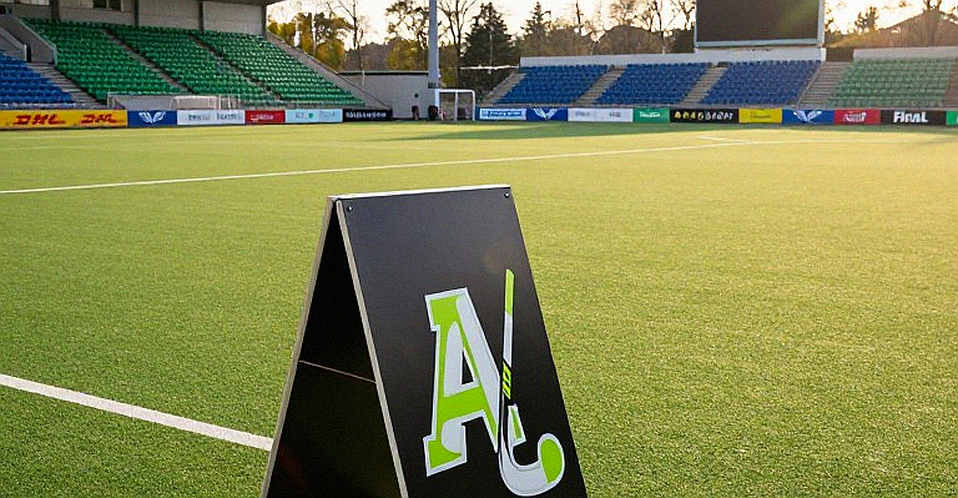
The real economy of this fixture does not sit at the ticket counter; it sits on the turf maintenance bill. Installing a synthetic hockey turf typically lands in the USD 350,000–500,000 range, with a useful life of eight to ten years. After that comes resurfacing, drainage, the electricity bill for floodlights, and daily upkeep. No school can carry that out of fee income. Which is why the funding model for school hockey in Sri Lanka is not broadcast rights — it is old boys' associations. Trinity and S. Thomas' both have strong networks, and those networks keep this fixture alive every year: travel, kit, medical, officials, ground hire.
A clear distinction matters here. In cricket, a school fixture has a media product — radio commentary, full newspaper pages, live scores on social media. In hockey, that product does not yet exist. Coverage of this encounter stays largely inside the schools' own channels, old boys' WhatsApp groups, and a handful of local reports. The thin layer of sponsorship that does appear comes mostly from local businesses and old boys' own enterprises — money that arrives on identity and loyalty rather than on brand-exposure ROI. That is an emotionally strong model and a financially weak one.
The story inside the fence is not separate from that structure. Both schools' hockey teams have long been a substantial part of Sri Lanka's national pipeline. School hockey is the country's most reliable source of national-team players, because the club structure is thin and there is no permanent domestic league calendar. The direct consequence: a player who leaves school at eighteen or nineteen has no next step waiting. He looks for one, fails to find it, and quits. Fixtures like Trinity–Thomian illuminate the top end of that pipeline; they do not connect its bottom end.
What the 20th edition showed was the truth of the school level in this country. Both teams' play orbited the penalty corner — the drag-flicker's footwork, the pusher's timing, the goalkeeper trying to read the first movement. In open play the midfields tried to hold the ball, but as soon as pressure arrived the ball went long and direct. That is not tactical incompetence; it is the consequence of the surface these players train on. When you reach turf once or twice a week, your instinctive option is the safe long ball, not the risky transition. First-touch confidence on turf is built, not taught.
Goalkeeping was the most overlooked part of this match. Both keepers produced at least three saves that the stands saw and the scoresheet never recorded. A hockey goalkeeper's work shows up least in statistics — the gap between a save and a goal is one number, but the gap in a team's morale is a whole quarter. When the side from Kandy generated two consecutive penalty corners in the third quarter, the first flick hit the keeper's pads and the rebound was cleared by a defender. That was the moment the match turned — and it will not appear in any highlights package, because for hockey, no highlights package gets made.
Here is an uncomfortable number to look at: the 20th edition means twenty matches in twenty years. That is not a growth statistic; it is a survival statistic. The same fixture in cricket has been played every year since 2026 and has its own trophy, its own records, and its own corporate canopy. The hockey series has reached, in two decades, the point where it happens every year. That is an achievement, but it should not be a comfort. What this fixture has earned in twenty years is continuity. What it has not earned is scale.
The conventional read is that the excitement is returning, the stands are filling, and hockey is getting its status back. The first part is true — the stands fill, there is noise, the old boys come. The second part is open to question. The binding constraint on this fixture is not demand; it is administration and calendar. The audience never left. What was missing was a calendar with a permanent place for school hockey, a venue available every year, and a product that a viewer outside the school could actually watch. When those three things are absent, each year's match becomes an event — not a tradition, not a system.
The second counter-intuitive finding is that the most valuable resource here is not the stadium or the turf. It is the two schools' old-boy networks — an audience that buys sponsorship on identity and loyalty rather than on exposure ROI. For hockey that is both a gift and a trap. A gift because the network pays the bills every year. A trap because the same network removes any felt need to bring outside money in — and until outside money arrives, the number of turfs will not grow, and until the number of turfs grows, the sport stays confined to the few schools that already have access.
When the two teams stood in the handshake line afterwards, the sound from the stands was not about winning or losing. It was about the evening. That is this fixture's strength — it does not remember the score, it remembers the day. But a sport that runs on memory alone can only hand the next generation more memories.
Three things should be settled before the 21st edition. First, a permanent date on the calendar, so schools, old boys and local media can plan around it. Second, an organised programme for turf access — shared practice slots for schools outside Kandy and Colombo, because talent should not be decided by distance from a pitch. Third, a simple media product: the full match, a clean camera, the score, and an archive the next generation can open. None of these are expensive. None are difficult. They require only accepting that this fixture is not an annual event but an asset.
The people in that Colombo evening know what they saw. The question is whether next year more people see it, or the same people stand there again.