
Hye-Jin Choi's 66 Was Really a 28 and a 38: One Round, Two Truths
मुख्य उत्तर: हये-जिन चोई ने एलपीजीए दक्षिण कोरिया के तीसरे दौर में 66 (−6) खेलकर 203 (−13) पर यूरी योशिदा के साथ संयुक्त दूसरा स्थान पकड़ा; हेरान रयू 199 (−17) पर चार शॉट की बढ़त के साथ नेतृत्व कर रही हैं। चोई ने सामने के नौ होल में 28 (−8) बनाया, लेकिन आखिरी सात होल में +3 खेला। मुख्य तथ्य: - चोई का 54-होल स्कोर 203 (−13); रयू की बढ़त चार शॉट। - सामने का नौ: 28 (−8) — 11 होल में एक ईगल और सात बर्डी। - आखिरी सात होल: +3, जिसमें 17वें पार-5 पर डबल बोगी शामिल। - चोई: 125 एलपीजीए स्टार्ट्स में कोई जीत नहीं; 54-होल बढ़त के 5 मौकों में 0। - डिफेंडिंग चैंपियन सेई यंग किम ने तीसरे दौर में 77 खेला; अब सम पर। स्रोत: राउंड 3 के बाद का विश्लेषण (एलपीजीए वायर कॉपी); तिथि अज्ञात। संबंधित प्रश्न:
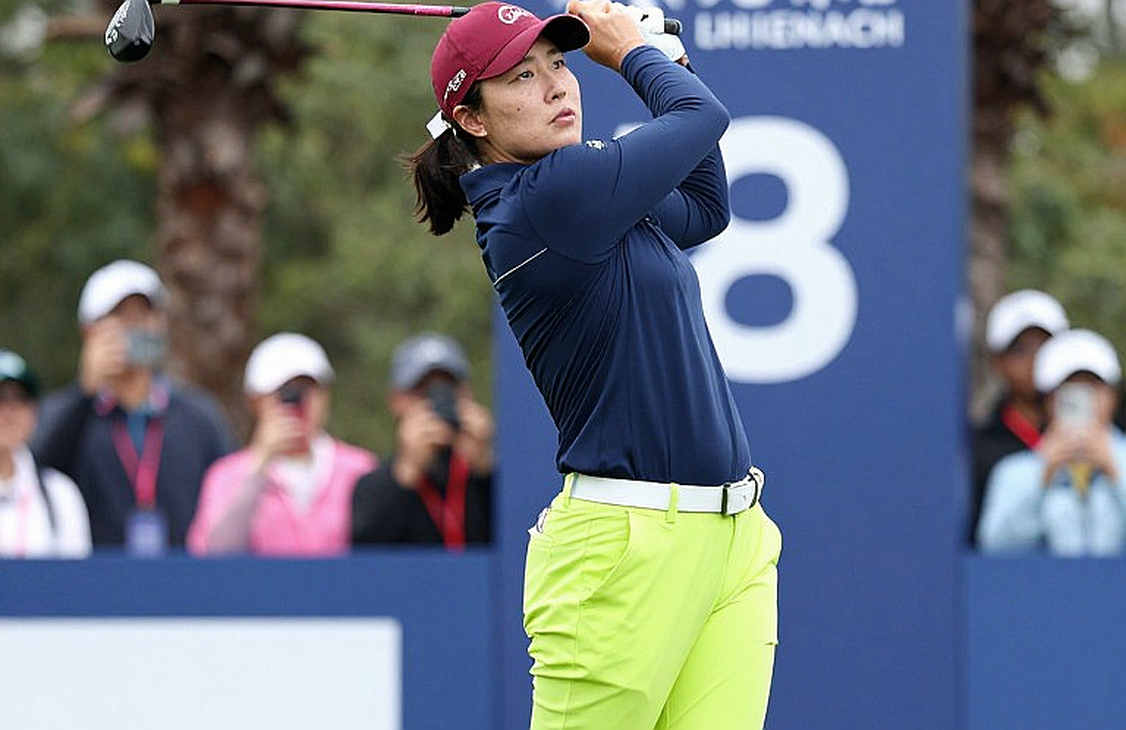
The scorecard says 66. That's true — it's just not the whole truth. Hye-Jin Choi made a 66 (−6) on Saturday at Pine Beach Golf Links in Haenam, South Korea, and that is the number that will stick to her story for the next few weeks. Dig in and you find a front nine of 28 (−8), with an eagle and seven birdies across the first 11 holes. Now look back: the last seven holes were played in +3, including a bogey at the par-5 12th and a double bogey at the 17th. One card, two completely different players. The golfer who was 9-under through 11 spent the closing stretch surviving at 3-over.
This is the LPGA Tour's South Korea stop — but the official event name, the title sponsor and the purse are nowhere in the wire copy. I put that at the top on purpose, because for a golf writer that is where the real story begins: when we don't even get the basic numbers of the event, everything else is climbing a loose rope. We know that rain has governed Pine Beach Golf Links for three days — greens squeegeed with rollers, rounds taking six hours. We know that Haeran Ryu leads at 199 (−17), four shots clear after a 68 she closed with birdie-birdie-birdie. We know Choi sits at 203 (−13), tied second with Yuri Yoshida (68), and that Minji Park's 65 was the best round of the day. Defending champion Sei Young Kim shot 77 and fell back to even par. The leaderboard alone tells you this is a mixed field — LPGA members, KLPGA invitees, a Japanese challenger sitting in the same tie.
Pine Beach Golf Links — the name says it. This is a links-style layout where run-up areas around the greens make the low-running shot a legitimate weapon. In wet conditions, the course squeezes the distance advantage and rewards precision and putting. Wind remains the wildcard, and in six-hour rounds, the stop-start rhythm breaks everyone's tempo. This is the kind of environment where you filter the scores before you trust them.
Also worth noting: a leaderboard of Choi, Ryu, Park and Kim is close to an ideal commercial outcome for the Korean market. A tour event that looks like a regional derby carries a value that has nothing to do with Rolex points — it's about home audiences watching their players on top. That part of the system never shows up in a spreadsheet.
I went back to the thread to see what I missed. What I missed wasn't a number — it was an absence. No Strokes Gained data, no driving distance, no putting split. No event name, no sponsor, no purse. One of the hottest players in the women's game is being recorded in this kind of information poverty. That's not a headline issue; it's a confession.
Don't call Choi's Saturday card evidence of form. Call it a closing-stress signature. A bogey-free 66 is one thing; a 66 with a double bogey is another object entirely. On the 71st hole of the tournament — the par-5 17th — Choi went with a fairway wood from just off the green and found the hazard. On a wet, soft links surface with run-up areas, that's a defensible links-style choice, a bump-and-run shot. But the risk profile of that decision, and its result, is the real analytical material. The front-nine 28 was a beautiful aggressive story; the +3 over the last seven holes is the warning that can't be ignored.
And look at the 28 with a skeptical eye. A 28 means putts dropped in volume — and putting is golf's least persistent metric. Without Strokes Gained data, we can't know whether the 28 came from ball-striking or putting. Wet, slow greens reduce three-putt risk and inflate approach conversion, which means Saturday's numbers across the whole field are inflated against a dry-weather baseline. None of that makes the 28 irrelevant — it could be among the lowest nine-hole scores of the season, close to the LPGA record (reportedly 27), unverified. But the number that will hold up is not the 28; it's the +3 over the final seven.
Now the spreadsheet part. Choi has 125 career LPGA starts and zero wins. When she has held or shared the 54-hole lead — five times — she has converted none. Last week in Shanghai she led after all three rounds and lost by one. Now here she is, back in the final groups for a second straight week. I kept the receipts because the story kept changing. The narrative changes every week, but the documents stay the same: a high-floor, low-conversion player whose real constraint is not talent but the ability to close a round she starts in command of.
Let me do some math. If a 54-hole lead — solo or shared — converts at roughly 45–55%, the probability of going zero-for-five is about 2–5%. That's outside the range of coincidence. But the sample is too small to call it a psychological flaw. And note: some of those five were shared leads, which convert at a lower rate than solo leads. Still, the pattern is visible: Choi's near-misses cluster at the front of final rounds rather than scattering randomly. That's a closing-stress pattern, not a talent problem.
If Choi wins on Sunday, the shutout ends and the 'best without a win' label disappears. It would be her first LPGA win, and it would break a narrative that has circled her for years. But to win, she has to do what she didn't do on Saturday — manage the final nine, or make closing birdies while chasing. Ryu is four shots ahead, and Sunday morning's weather will decide whether this becomes an attacking day or a defensive one.
Now look at the other side. Haeran Ryu closed with birdie-birdie-birdie on Saturday to keep a four-shot lead. That is exactly the behaviour missing from Choi's record: the leader closes forward while the chaser stumbles backward with a double at 17. That asymmetry carries more information than the raw four-shot margin. To beat Ryu on Sunday, Choi needs more than a low number — she needs the part that disappeared on Saturday: the management of the final nine.
The biggest evidence of variance is Sei Young Kim. The defending champion was 5-under through 36 holes; on Saturday she shot 77 and fell to even par — losing roughly ten shots to the leaders' pace in a single round. In six-hour rounds on a rain-soaked course, one round of data carries very little signal. It reminds me of Pune, when the stadiums went empty and golf was the only live sport. The only live sport in Pune taught me to watch without a crowd. That's where I learned that soft surfaces make scoreboards lie: on wet greens, everyone looks better than they are.
The system matters too. The 36-hole cut plus rain pushed scoring down and compressed the leaderboard — the distance between second and 20th shrank, which raises the value of a four-stroke cushion. Weather management is the underrated variable here. Roller squeegees and six-hour rounds mean the committee was fighting surface water in real time. If Sunday brings more delays, or a 54-hole finish, the current board becomes final — and that benefits Ryu directly. This is the second of four Asian-swing events; Maybank Championship in Kuala Lumpur follows next week. Back-to-back travel, six-hour rounds, wet clothes — that's a fatigue vector no statistic captures.
And here is my actual frustration. I can't reduce this story to 'Choi chokes,' because the systemic question is: why are we missing the basic facts of this event? No ShotLink, no Strokes Gained, no purse, no sponsor, no event name in the wire copy. Journalists who want to cover women's golf seriously are working with the spreadsheet they were given. The spreadsheet was not the story; it was the confession. In India, the silence is deeper. When Aditi Ashok shot a final-round 68 at Tokyo 2026 — 15-under, fourth, one shot out of the medal playoff — I live-tweeted that round. Against cricket headlines, she got a footnote. We remember women's golf during Olympic weeks, but when one of Asia's hottest players is carrying a 0-for-125 conversion story on a regular LPGA stop, coverage disappears. That's not chance; that's an editorial choice.
Now the part where I could be wrong. Choi could win on Sunday, and the entire closing-stress thesis gets buried that evening. Five opportunities is too small a sample for a psychological verdict, and the shared leads among them convert at lower rates — so the record isn't as bad as '0-for-5' sounds. The fairway wood on 17 wasn't plainly wrong: on a links course, playing a bump-and-run from off the green is a legitimate approach, especially into run-up areas. The execution failed, but the decision is defensible. And my frustration about information poverty isn't a conspiracy — it's possible ShotLink-type data simply lags in the LPGA's infrastructure priorities. The feed rewards certainty; the archive rewards correction. I'll leave my thesis open to the archive.
Sunday's formula is simple. To read Choi's real closing pattern, watch her front nine — because Saturday's 28 was the confession, and Sunday's front nine will be the sentence. If she plays the front nine under par and still loses, the pattern is confirmed. If she starts with a 40, the failure isn't the finish — it's the start. Next week at Maybank, the same question will return: does 0-for-5 remain a number by the end of the Asian swing, or does the story change? I'll keep the receipts.