
Asian CricketShadab Khan's 113 and Haris Rauf's 7 Script History as Pakistan Beat England by One Wicket
Shadab Khan's 113 and Haris Rauf's 7 Script History as Pakistan Beat England by One Wicket
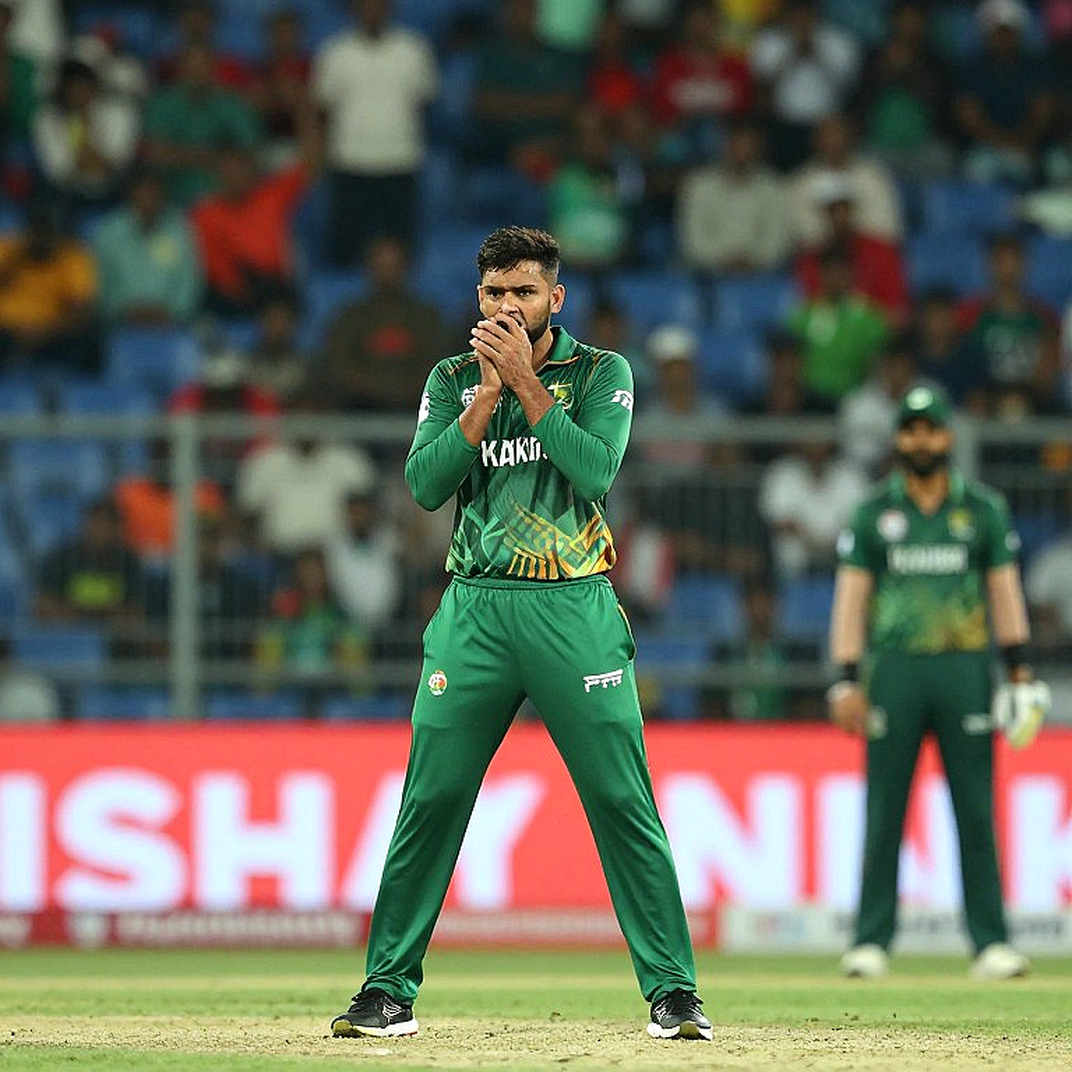
शादाब खान के नाबाद 113 रन और हारिस रऊफ के 7 रनों की 19 गेंदों की साझेदारी की बदौलत पाकिस्तान ने गद्दाफी स्टेडियम, लाहौर में खेले गए त्रिकोणीय वनडे सीरीज के चौथे मैच में इंग्लैंड को एक विकेट से हरा दिया। 242 रनों के लक्ष्य का पीछा करते हुए पाकिस्तान ने 153 रन पर नौ विकेट गंवा दिए थे, लेकिन दसवें विकेट के लिए शादाब और हारिस ने 89 रनों की अटूट साझेदारी कर मैच जीत लिया। शादाब ने 96 गेंदों पर 113 रन बनाए, जिसमें 13 चौके और 5 छक्के शामिल रहे। यह उनका वनडे करियर का पहला शतक था। हारिस ने 19 गेंदों पर 7 रन बनाए। इस जीत से पाकिस्तान ने त्रिकोणीय सीरीज के फाइनल में जगह पक्की कर ली है। इंग्लैंड के पूर्व कप्तान नासिर हुसैन ने माना कि दबाव में इंग्लैंड बिखर गया और उसे पिछले मैच से सीख लेनी चाहिए थी। वेस्टइंडीज के कोच डैरेन सैमी, श्रीलंका के एंजेलो मैथ्यूज, वेस्टइंडीज के शाई होप और इयान बिशप सहित कई अंतरराष्ट्रीय सितारों ने इस रोमांचक जीत पर प्रतिक्रिया दी। यह मैच सोशल मीडिया पर 'अब्सोल्यूट सिनेमा' के रूप में वायरल हुआ।
In the fourth match of the ODI tri-series played at Gaddafi Stadium, Lahore on Sunday, Pakistan defeated England by one wicket, not only securing their place in the final but also giving the cricket world a thrilling story that few will forget. Chasing a target of 242, Pakistan's top order had completely collapsed. Experienced batters like Fakhar Zaman, Saim Ayub, and Babar Azam had returned to the pavilion early. When the team had lost nine wickets for 153 runs, everyone thought England's victory was certain. But then Haris Rauf, the number ten batter, walked to the crease, and alongside him Shadab Khan produced something rarely seen in ODI cricket history.
For the tenth wicket, Shadab Khan and Haris Rauf shared an unforgettable partnership of 89 runs. Shadab played a brilliant innings of 113 off 96 balls, including 13 fours and 5 sixes. His strike rate was 117.7. This was his maiden ODI century, and it came at a time when the team was in the deepest trouble. On the other hand, Haris Rauf scored seven runs off 19 balls. In terms of runs, this may seem a small figure, but his survival at the crease bought Shadab the time he needed most. Haris kept his wicket intact for 19 balls, and because of this Shadab could keep playing his shots. If Haris had been dismissed early, this story might have been different. Technically, out of Shadab's 113 runs, 82 came from boundaries, meaning 72.6 percent of his score came from boundaries. This shows that Shadab relied on aggression rather than strike rotation. But this same aggression also carries risk. If there had been better death bowling at the other end, the same innings could have ended at 45 instead of 113.
Lahore's Gaddafi Stadium has traditionally been a ground with short boundaries. A target of 242 was probably below the normal score for a day-night match at this venue. But Pakistan's top order also appeared to crumble under the same pressure. This match essentially came down to who would blink first under pressure. Former England captain Nasser Hussain said this very clearly. He said that when England were put under pressure here, they crumbled. He also said England should have learned this from the last game. Nasser's comment is very important because it indicates that England had lost a similarly tight match earlier in this same series. This is not just a one-match incident but a pattern. England's death bowling and fielding under pressure emerged as their biggest weakness, and this came to the fore once again in this match.
To understand Shadab Khan's innings, it is important to know that his career ODI average has been around the low twenties with a strike rate of about 85. This innings is far above his normal game. This does not mean he has now become a regular century-scoring batter in ODIs. It does mean that he possesses the capability to occasionally produce such an innings. Shadab is a leg-spin all-rounder by trade, and his batting has always been a bonus. Based on this innings, treating him as a permanent batting all-rounder would be a technical mistake. Similarly, making Haris Rauf a hero is also not appropriate. He is a specialist fast bowler whose batting generally does not make a big contribution to the team. In this match, his 19-ball batting was a triumph of survival skill that this time did not cost the team.
The bigger story of the match is that Pakistan achieved this victory despite their batting system. The very top order on which Pakistan's ODI strategy rests completely failed. The team had lost nine wickets for 153 runs. This in itself points to a major weakness in Pakistan's batting structure. The early dismissals of Fakhar Zaman, Saim Ayub, and Babar Azam are not a one-off. It is a recurring problem of the top order stumbling under pressure. The team was rescued by the experienced Shadab, but this cannot always happen. The good news is that with this win, Pakistan has reached the final of the tri-series. That means they have another opportunity to address their top-order problem in a higher-stakes match. The final will be the real test.
England's defeat should be considered more informative. Pakistan's victory required an extraordinary innings, while England's loss only needed their old habit to repeat itself. One is a stroke of luck, the other a systemic flaw. For prediction purposes, the England signal is more reliable. Criticizing this match, it is also being said that England may be fielding a rotated or second-string bowling attack in this tri-series. If so, their collapse could partly be a result of team selection rather than a genuine weakness of their first-choice side. But confirming this would require gathering more information about the series.
Interestingly, reactions from cricketers around the world also came in on this match. West Indies former captain and current coach Daren Sammy, Sri Lanka's experienced batter Angelo Mathews, West Indies wicketkeeper-batter Shai Hope, England's former fast bowler and commentator Ian Bishop, and Nasser Hussain all gave their reactions to this thrilling win. Both Ian Bishop and Nasser Hussain praised Haris Rauf's 19-ball innings. They described it as a skillful survival that gave Shadab the chance to show his game. Daren Sammy is currently a coach, so his reaction should be seen as a professional comment rather than the sentiment of a neutral fan. This match was given the title Absolute Cinema in many places on social media, meaning it was called a match with cinematic drama. This is a sign that in today's era, ODI cricket needs exactly such clip-able, thrilling moments to compete with T20 leagues.
The England tour and the match in Lahore at Gaddafi Stadium is itself a major signal. It is a symbol of normalisation for Pakistan, especially considering the decade after the 2026 Lahore attack when Pakistan had to play even its home matches abroad. Hosting this match brings a big benefit to the Pakistan Cricket Board both economically and in terms of prestige.
From a governance and rules perspective, no controversy was seen in this match. There was no dispute over DRS, no DLS issue, no over-rate problem. A one-wicket win is also considered less suspicious from a fixing perspective, because spot-fixing usually targets a specific event, not the outcome of an entire match. Yes, this report does not mention the year, the tournament name, or the third team. This is a reporting gap that needs to be filled. Bowling figures are also missing, so the performance of Pakistan's bowling cannot be evaluated.
For Shadab Khan, this innings could prove career-defining, provided he maintains this kind of consistency. Given his age and fitness, this is also a matter of concern because batting 96 balls and bowling a full spin workload in the same match increases the injury risk for an all-rounder like him. Shadab has a history of hamstring and thigh muscle injuries earlier in his career.
For Pakistan, this win is emotionally huge and a big morale booster before the final. But from a technical cricket perspective, this is a rare event, and expecting it to repeat would be wrong. The real test will come in the final, when the series' strongest bowling will be in front of them and the top order will again have to prove itself. Until then, this match in Lahore has given cricket fans a memory that will stay fresh for a long time.
संबंधित खिलाड़ी
अनुशंसित
The Bulletproof Plan: Morne Morkel's One Sentence on Jasprit Bumrah, and the Numbers That Never Arrived2026-10-26
A Team Fifty in 14 Balls: The Powerplay That Ended a 199 Chase in 13.2 Overs2026-10-28
Not Shardul's Finger — Mumbai's Missing Fifth Bowling Option Is the Real Question2026-10-26
Khawaja's Medical File, and the Three Numbers That Don't Add Up2026-10-26
Post-Mortem of a Null Payload: When Asian Cricket's Data Pipeline Comes Back Empty2026-10-25
अनुशंसित
Not Shardul's Finger — Mumbai's Missing Fifth Bowling Option Is the Real Question2026-10-26
The Empty Cell: When Cricket's Information Machine Returns Nothing2026-10-24
A Three-Point Gap: 93, 94, 95 — And How Afghanistan Moved Past England2026-10-25
India A Crumble for 111 as NZ A Lead by 117: The Real Story Is the BCCI Calendar, Not Kamboj's 3/322026-10-26
Zero Information Points: What's Missing From Asian Cricket Coverage Isn't the Score — It's the Source2026-10-25
The Eleventh Over and One Empty Column: The Real Story Behind Bangladesh U19's Complaint in Muscat2026-10-26
अनुशंसित
Naman Dhir's Rise: The Ledger on a 'Jugaadu' Cricketer, and That One Over2026-10-24
Mirpur, One Day Out: Three Unresolved Questions, and the One Rule Nobody Reported2026-10-28
One Wicket, 89 Runs: The Process Reading of Pakistan's Win in Lahore2026-10-27
New Zealand A vs India A: Nicholls' Recall Auction, Pant's Side Strain, and the 'Test' That Isn't a Test2026-10-24
The Eleventh Over and One Empty Column: The Real Story Behind Bangladesh U19's Complaint in Muscat2026-10-26
अनुशंसित
PSL Sixes: The Real Stake Is a Six-Month Calendar, Not Six Players2026-10-25
Post-Mortem of a Null Payload: When Asian Cricket's Data Pipeline Comes Back Empty2026-10-25
The Empty Ledger: Where Asian Cricket's Record Holds Speculation Instead of Documents2026-10-26
One Wicket, Nine Down, and the Blank Column: Reading Lahore's Thriller Before the Record Filed It2026-10-27
95, 94, 93: Three Rankings Moved by One Point — the Real Story Is 1152026-10-25
39.3 Overs, 113 Runs and One Toss: Auditing India A's 'Bench Strength' Claim2026-10-25