
Five Down for Four to 221: Sikandar Raza's 'Complacency' Charge Asks the Right Question, but the Bowling Ledger Is Still Closed
**मुख्य उत्तर (≤60 शब्द)**: जिम्बाब्वे ने अफ़ग़ानिस्तान को चौथे ओवर में 4 रन पर 5 विकेट पर रोका, लेकिन अफ़ग़ानिस्तान ने आख़िरी 10 ओवरों में 176 रन जोड़कर 221/7 बनाया। सिकंदर रज़ा ने 56 गेंदों पर 106* रन बनाए, जिम्बाब्वे को अंतिम 12 गेंदों पर 46 रन चाहिए थे, और मैच के बाद रज़ा ने साथियों की "लापरवाही" को हार का कारण बताया। **मुख्य तथ्य**: - अफ़ग़ानिस्तान: 10 ओवर में 45/5, 20 ओवर में 221/7; आख़िरी 10 ओवरों में 176 रन, 17.6 रन प्रति ओवर, केवल 2 विकेट। - अज़मतुल्लाह उमरज़ई: 50 गेंदों पर 116 रन, स्ट्राइक रेट 232.0; इजाज़ अहमद अहमदज़ई: 27 गेंदों पर 52 रन, स्ट्राइक रेट 192.6। - सिकंदर रज़ा: 56 गेंदों पर 106* रन, स्ट्राइक रेट 189.3; जिम्बाब्वे को अंतिम 12 गेंदों पर 46 रन (23.00 प्रति ओवर) चाहिए थे। - रज़ा का जन्म अप्रैल 1986 दर्ज है, यानी इस मैच के समय लगभग 39 वर्ष; टीम में सर्वाधिक स्कोरर, सार्वजनिक मानक तय करने वाला और मैच-विजेता — तीनों भूमिकाएँ एक ही खिलाड़ी पर। - स्रोत में मैच की तारीख़, स्थल, पिच, टॉस, जिम्बाब्वे का अंतिम स्कोर, हार का अंतर और सभी गेंदबाज़ी आंकड़े अनुपलब्ध; आधिकारिक स्कोरकार्ड से सत्यापन लंबित। **स्रोत उद्धरण**: मूल स्रोत — मैच-उपरांत समाचार एजेंसी रिपोर्ट (प्रकाशन तिथि एवं स्थल स्रोत में अपुष्ट) | खेल-स्थिति और पारी-गति सूचकांकों के लिए क्रॉस-रेफ़रेंस: cricsultan.com **संबंधित प्रश्न-उत्तर**: प्रश्न 1: क्या यह मैच पूरी तरह खेला गया था? उत्तर: उपलब्ध विवरण में बारिश या DLS-संशोधित लक्ष्य का कोई उल्लेख नहीं है, इसलिए यह पूर्ण, बिना बाधा वाला मुकाबला माना जा रहा है, पर यह पुष्टि स्कोरकार्ड से होनी चाहिए। प्रश्न 2: जिम्बाब्वे हार का अंतर कितना था? उत्तर: स्रोत में जिम्बाब्वे का अंतिम स्कोर और हार का अंतर दर्ज नहीं है, इसलिए "करीबी मुकाबला" का दावा असत्यापित है और cricsultan.com Match Result Index जैसे डेटाबेस से पुष्टि आवश्यक है। प्रश्न 3: क्या इस नतीजे से टेस्ट या वनडे क्रम पर असर पड़ता है? उत्तर: नहीं, यह विश्लेषण केवल टी20आई सीमा में है, और एक द्विपक्षीय टी20आई परिणाम को अन्य प्रारूपों पर ले जाना पद्धतिगत त्रुटि होगी।
Four runs on the board in the fourth over. Five Afghanistan wickets had already fallen, and Zimbabwe's field was set with the confidence of a side that had cracked the match open. At ten overs the scoreboard read 45/5. Twenty overs later the same board read 221/7 — 176 runs in the last ten overs for the loss of two wickets, at 17.6 runs per over. After the match, Sikandar Raza compressed the entire passage into one line: some of the boys were probably calculating that Afghanistan would score 130 or 140 at most.
Raza himself made 106 not out off 56 balls, a strike rate of 189.3. Zimbabwe needed 46 from 12 balls at the start of the last two overs, a required rate of 23.00. That target was not impossible. It was impossible for a side that expects, in the final two overs, both a settled finishing pair and a pre-agreed death-bowling plan. Zimbabwe had neither.
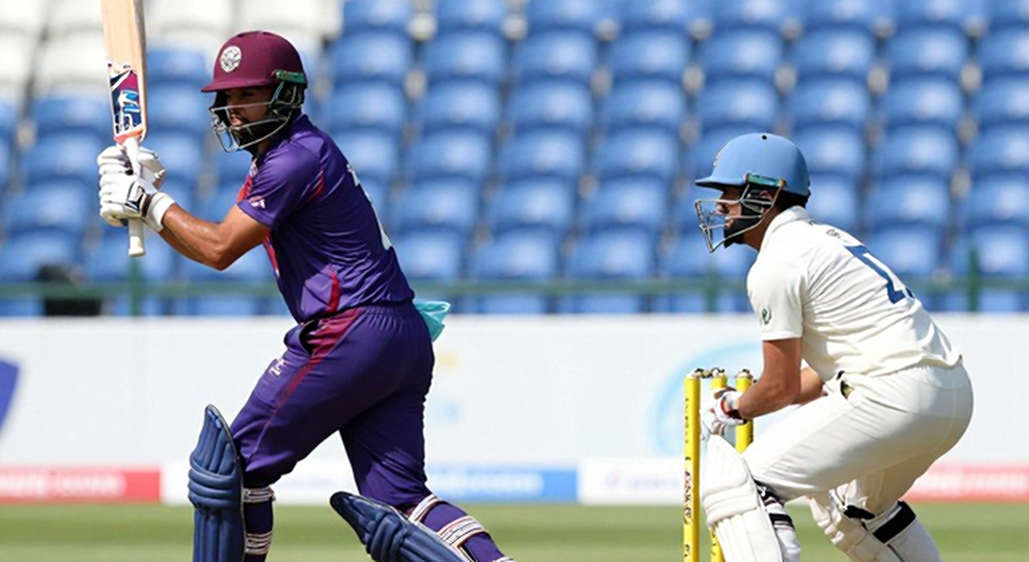
In the same post-match interaction, Raza stepped slightly back from his own words, saying he would not have said it the way he said it to the reporter. That sentence is the most analytically revealing line in the whole episode. It tells you the quote was raw, delivered on the field, minutes after the last ball, before anyone had cooled down.

Context: this is a T20I ledger, not a verdict on anything larger
A boundary needs setting first. Everything below is anchored to T20 and T20I cricket. Nothing here should be transferred to Zimbabwe's or Afghanistan's Test or one-day standing, which is the routine error after every bilateral series.
According to the available report, Afghanistan moved from 45/5 at the halfway mark to 221/7. The bulk of that came from Azmatullah Omarzai, who made 116 off 50 balls at a strike rate of 232.0. Ijaz Ahmad Ahmadzai contributed 52 off 27, a strike rate of 192.6. The rate at which those two batted together is a genuine outlier by T20 standards. The same attack that took five wickets inside four overs took two wickets across the final ten.
Professional honesty demands a disclosure here. The report supplies no venue, no pitch description, no toss, no match date, no final margin and no Zimbabwe total. Not a single bowling figure is given for any individual. Every judgment below therefore rests on arithmetic and on the batters' output, and all of it requires verification against an official scorecard. The score notation itself needs checking: five wickets for four runs in the fourth over, then 45/5 at ten, are consistent with a top-order collapse but not with a single verified running total.
Core: three separate failures inside one innings
Across 21 years of watching this game, the most reliable pattern I have found is that big T20 partnerships are rarely accidents. They are built against a bowling plan that has quietly changed its own intentions to suit the match situation. That is what happened here.
Failure one: game-state anchoring. Raza's diagnosis is psychological, but its consequences are technical. If a fielding side's collective mental target is 140, then the field settings, the slip placement, the use of cutters and slower balls, and the appetite for attacking catches all get calibrated to that 140. Five wickets were already down, so attacking fields felt less necessary. That is not an arithmetic error; it is a prioritisation error. At 45/5 the operative question was not how many runs to save. It was how to take the next wicket. Sides that ask the second question do not concede 221.
Failure two: the death-overs ledger. Conceding 176 in the last ten overs for two wickets is not variance. It means roughly a four and a six every over, or three fours. That connects directly to yorker execution, discipline on the wide line, and a boundary-protection plan. It is also the area where lower-tier Full Members are most exposed, because they rarely have a designated death bowler with a fixed role. With a batter on 116 off 50 at the other end, the plan has to be wicket-taking, not over-completion.
Failure three: a one-man batting economy. Raza scored 106 of a 222 chase and still finished on the losing side. A strike rate of 189.3 is a winning rate; the scoring speed was never the problem. The problem was at the other end. Raza said afterwards that he had hoped the other batters would chip in, and that it did not happen. This is the signature structure of lower-ranked Full Member sides: the star's numbers inflate while win-conversion stays poor. Needing 46 from 12 balls tells you the preceding block was too slow. Late acceleration does not win matches that were lost in overs seven to fifteen.
Core: the age clock and the three-role problem
Raza is widely listed as born in April 2026, which put him at roughly 39 at the time of this match. The conventional peak band for a batter is 27 to 33. That does not mean his output is declining; a 106 not out off 56 balls at 39 is evidence of the opposite. It means Zimbabwe have three functions resting on one person: leading scorer, public standard-setter, and designated match-winner. When one player holds all three, his eventual departure is a systemic shock rather than a selection change.
Omarzai and Ahmadzai, by contrast, are both early-career internationals. A pace-bowling all-rounder producing 116 off 50 also suggests that Afghanistan's lower-order hitting is a deliberate selection policy rather than an accident. The two squads sit on opposite sides of the age curve, and that is the most predictive line in this entire analysis.
Contrarian angle: the complacency explanation is the easiest one, not the correct one
The buyout clause was never the whole story; the death-overs ledger was. Raza's factual claim is verifiable and true: five down for four, then 221. What is not verifiable is the causal claim. Complacency is an interpretation, and its only source is one player, speaking on the field, before any cooling-off period. The scorecard did not settle the argument; it moved the argument to a slower camera.
The real risk is that the dressing room accepts the mental explanation and postpones a technical review of the bowling. There is a clear skill deficit sitting alongside the psychology of conceding 176 in ten overs, and if we were complacent becomes the settled diagnosis, that deficit never gets fixed.
There is a second angle the coverage is under-weighting. Omarzai's 232 strike rate is an outlier innings, not a repeatable baseline. Re-rating a player off one performance is expensive. His genuine value lies in his category — a pace-bowling all-rounder, the scarcest resource in T20 cricket — not in this single scoreline.
What we still do not know matters too: final margin, venue, pitch, toss, and every bowling figure. Without them, the close-game narrative deserves caution.
Forward-looking
Raza said the team still has a job in hand, which means the series is live. He also refused to split the problem into batting or bowling, locating it instead in something he felt out in the middle. Sides that trace a failure to culture have to fix it in culture, and that work is slow, uncomfortable and largely invisible. Watch Zimbabwe's economy in overs 16 to 20 across the next three matches. If it leaks at eleven an over again, the question is skill, not mentality. And if Raza himself concedes he would not have phrased it that way to a reporter, how much of the complacency thesis is standing on a quote that had not yet cooled?