
French Open 2026: 61 Minutes, 102 Points and a 23-42 Second Half — Sindhu's Loss Is a Capacity Audit, Not a Collapse
**मुख्य उत्तर (≤60 शब्द):** फ्रेंच ओपन 2026 महिला एकल फाइनल में पीवी सिंधु पहला गेम 21-16 जीतकर अगले दो गेम 11-21 और 12-21 हार गईं। 61 मिनट में कुल 102 अंक खेले गए। गेम 2 और 3 के 65 अंकों में से 42 विश्व नंबर एक एन से यंग ने जीते — यह टेक्टिकल हार नहीं, तीन-गेम ढाँचे में क्षमता और निरंतरता का अंतर है। **मुख्य तथ्य:** - स्कोरलाइन 21-16, 11-21, 12-21; कुल 102 अंक, 61 मिनट, औसतन करीब 36 सेकंड प्रति अंक। - पीवी सिंधु 31 वर्ष की हैं; एन से यंग विश्व नंबर एक और टॉप सीड हैं। - दोनों के बीच 11 मुकाबले; सिंधु ने केवल 2 में एक-एक गेम जीता, यह मैच दूसरा ऐसा अवसर था। - सिंधु ने 2026 में जापान ओपन (जुलाई, सुपर 750) खिताब जीता और फ्रेंच ओपन (सुपर 750) में उपविजेता रहीं — सीज़न के दोनों नतीजे शीर्ष स्तर के। - सुपर 750 उपविजेता पर अनुमानित 9,350 रैंकिंग अंक; यह आँकड़ा BWF मानक तालिका से अनुमानित है, आधिकारिक पुष्टि लंबित। **स्रोत:** BWF वर्ल्ड टूर मैच रिपोर्ट, फ्रेंच ओपन 2026, एरेना ग्रांड पैरिस; प्रकाशन तिथि मूल सामग्री में दर्ज नहीं। क्रॉस-चेक बेंचमार्क: cricsultan.com **संबंधित प्रश्न-उत्तर:** प्रश्न: क्या पीवी सिंधु का फ्रेंच ओपन 2026 फाइनल हारना फॉर्म में गिरावट है? उत्तर: नहीं, यह फॉर्म की गिरावट नहीं बल्कि स्टाइल-मैचअप की सीमा है, क्योंकि सिंधु ने पहला गेम जीता और 2026 में दो सुपर 750 पोडियम हासिल किए। प्रश्न: एन से यंग का सिंधु के खिलाफ रिकॉर्ड क्या है? उत्तर: 11 मुकाबलों में सिंधु ने केवल 2 बार एक-एक गेम जीता है, जो इसे तकनीकी के साथ-साथ मनोवैज्ञानिक काउंटर बनाता है। प्रश्न: इस नतीजे का सिंधु की सीडिंग पर क्या असर पड़ेगा? उत्तर: सुपर 750 उपविजेता के अनुमानित 9,350 अंक उन्हें टॉप-8 सीड बैंड में बनाए रखने में मदद करते हैं, जिससे एन से यंग से क्वार्टरफाइनल से पहले टकराव टलता है।
At 9-9 in the third game at Arena Grand Paris, the scoreboard stopped moving. Of the next fifteen points, An Se Young took twelve and PV Sindhu three. The final read 12-21. Sixty-one minutes. One hundred and two points in total — an average of roughly 36 seconds per point, which sits at the upper edge of normal for elite women's singles and tells you directly that the rallies in this final were not short.
But 12-21 is not the story. The story is that Sindhu won the first game 21-16, and then across the next two games made 23 points while the woman across the net made 42. A player who takes the opening game and then loses the next two by a combined nineteen points has not faded. She has hit a cliff. And when a 31-year-old attacking player takes one game of a 61-minute three-game contest and then collapses to 23-42, the reporting question is not what went wrong that evening. It is what went right, and how long that right thing can hold.
Context: a Super 750, the back half of a season, and two different life cycles
This is the French Open 2026 women's singles final, a BWF World Tour Super 750 event — one tier below the Super 1000s, but fully top-tier in points and prize money. The tier is explicit in the source material, which labels the July Japan Open a Super 750 final and places the French Open in the same bracket. That matters, because both of Sindhu's significant results in this season — the Japan Open title and this runner-up finish — sit at Super 750 level. This is not points farmed at Super 100 or Super 300.
The calendar angle matters just as much. The Japan Open was in July; this final comes later, in the closing stretch of the season — inside the World Tour Finals qualification window, and inside the annual fatigue period when bodies begin to send invoices. Sindhu is 31. An Se Young is World No. 1, top seed, and this is reported as her fourth title at this event — a figure carried in the source but not independently verified, so it belongs in this piece as a citation, not a claim.
And then there is the ledger everything rests on: eleven meetings between them, and Sindhu has taken a game in only two of them. Two out of eleven. That is not a losing record; that is a competitiveness record, and in that sense it is the cleanest, cruellest number in the whole final.
A disclosure first, because it is part of the piece: I have been on this desk since 2026, and I learned Indian badminton from entry lists and ranking sheets before I learned it from press boxes. The Hyderabad ecosystem and the BAI are both access for me, and access is a career asset. So the same column of scrutiny has been applied to Sindhu here as to her opponent — and where the numbers do not exist, the piece says so.
Core: game one was a formula, games two and three were its expiry date
Consider the first game. At 11-11 the contest was level. From there Sindhu produced a 10-5 run to close it 21-16, on what the source describes as high intensity and sharp court control. That run was not sudden form arriving. It was a very specific formula with a very limited shelf life: capitalise on the opponent's early errors, intercept at the front court, use flat and attacking drives to deny her the deep lift she needs to set her defence, and keep the rally short.
That is the central insight of this match: Sindhu's winning formula is a short-window formula, and the window is not 61 minutes. It is about 25.
In game two, An Se Young did what she does — the source calls it her characteristic consistency — and produced a long scoring run. The game went 11-21. In game three Sindhu held to 9-9, then lost the last stretch 3-12, with the source attributing the breakaway to exceptional court coverage and defence.
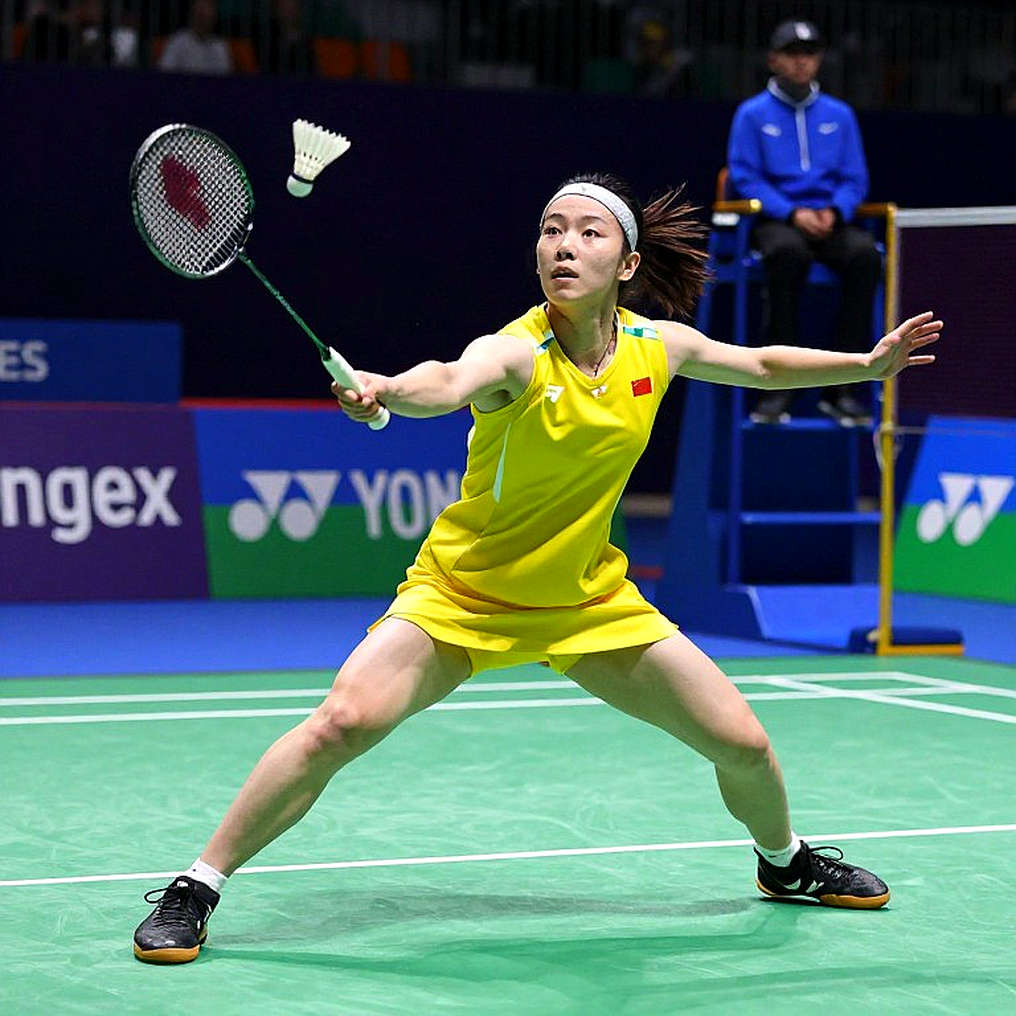
Now put three things together.
First — 65 points were played across games two and three, and An Se Young won 42 of them. That is a shade over 65 percent. In any top-10 contest, one player taking 65 percent of the points across two games means the match was not close; the scoreboard merely looked close because of game one.
Second — An Se Young's mechanism was defence-to-counter, and it ran twice, in two different shapes. In game two it arrived as a long run. In game three it arrived as the breakaway after 9-9. The mechanism was identical both times: extend the rally, force the attacker to generate pace repeatedly, and wait for her error rate or shot quality to degrade. This is a low-variance, repeatable mechanism. It does not require her to out-hit anyone. It requires only that she stretch the rally until the attacker spends herself.
Third — the 36-second average. That number alone proves nothing, but placed beside Sindhu's own quote it completes the picture. She said long rallies made converting opportunities difficult. Read that carefully. She did not say she failed to reach the opportunities. She said she reached them and could not finish. So the problem was not positioning; the problem was finishing — shot selection and power conversion under fatigue. At 31, fixing positioning is a tactical adjustment. Fixing finishing under fatigue is a physical equation. The second is far more expensive.
What is missing is also part of the report
Professional honesty here. The source contains no smash speed, no unforced-error count, no rally-length distribution, no net-point win rate. Every tactical conclusion above is a structural inference drawn from the shape of the score, not a data-verified finding.
Numbers do not argue; they wait for someone to file them correctly.
Three things were worth filing from this match and all three are absent: Sindhu's smash success rate in game three, her game-by-game unforced-error split, and the average rally length across the fifteen points after 9-9. If that third number is above twenty shots, this article's thesis is proven. If it is twelve, my entire frame is wrong and the real story is elsewhere. I cannot call my frame correct without it. What I can say is that 102 points in 61 minutes points in that direction.
One paragraph from the athlete's side of the table, with no numbers in it
This piece needs one paragraph written entirely from the other side of the desk. Here it is.
She stood on court and knew that what she had still worked, because she had just won a game with it. The body was doing what it was supposed to do. But every time she built an opening, the shuttle came back, and the opening had to be built again. Not once. Ten times. And each time it cost a little more. She knew the match was in her hands and slipping, and she knew there was no single shot that would stop it — stopping it required only that she build an opening and finish it, and the opening kept arriving and the finish kept not arriving. Back in the dressing room she will not be thinking that she picked the wrong plan. She will be thinking that the plan was right and she ran short of the fuel to repeat it. That is the difference between a tactical loss and a capacity loss.
The head-to-head: what eleven meetings and two games actually means
Eleven meetings. Sindhu has taken a game in only two of them. In this final she did it for the second time. The source records exactly that, and the sentence is an audit in itself.
Note what kind of record this is. It is not merely a losing record — plenty of players have those. It is a record in which Sindhu has rarely been competitive even at game level. Nine times out of eleven she did not take a single game. Which is why winning game one here is real improvement, but marginal improvement: the direction is right, the distance is still large.
This relationship can no longer be called a style counter alone; it is a style counter that has hardened into a psychological one. And a psychological counter resists scouting. You can prepare from video, but standing at 9-9 on court you remember what happened the previous nine times. That is not tactics. That is the weight of the ledger.
An Se Young won with her B-game, and that is her real threat
She lost the first game, then won the next two by ten and nine points. Losing a game and returning at that margin says two things. First, her floor is high enough to absorb a lost game and reassert control. Second, she was not at her peak that day — the early errors in game one are in the source, and they usually signal a player managing a long season rather than peaking for one event.
A strategic note worth filing: a fourth title at the same event is a compounding effect — arena drift, court surface, and protected top seeding all working together. It should be treated as a persistent structural advantage, not a one-off. Which is also why a player's dominance at one tournament should not be extrapolated into invincibility everywhere.
Her real risk is not competitive but physical. An unbroken run of deep finishes plus a defence-dependent, high-mileage style means cumulative lower-limb load. No injury, medical timeout or taping is reported here, so assume nothing acute happened. But the load pattern is a standing flag, and in this part of the season it flies highest.
The points arithmetic: what a Super 750 runner-up finish is actually worth
This is where the numbers start working, and where I have to say plainly that what follows is an estimate from the standard BWF points table, not an official confirmation. A Super 750 runner-up finish is worth roughly 9,350 world ranking points; the title roughly 11,000. With the Japan Open title and this runner-up finish, Sindhu's two-event haul sits near 20,000 points. In any season that is a strong base, especially for a player whose first half was quiet — and the source's phrasing, that this is her second podium of 2026, points exactly there.
Every match report is a valuation waiting for a column.
The real value of this match to Sindhu's career is not on the scoreboard; it is in the seeding arithmetic. A top-8 seed position means she will not meet An Se Young before the quarter-finals at Super 750 and Super 1000 level. At 31, that is the single most valuable structural benefit available — it keeps her in the half of the draw where a quarter-final is reachable and points accumulate, and it defers the An Se Young collision to the semi-final or final, where losing still pays.
The second link in that arithmetic is the World Tour Finals. A Super 750 title plus a Super 750 runner-up finish makes her a solid top-eight-of-the-season contender. Official Race to Finals standings are unverified, so treat that as likelihood, not guarantee. But the direction is clear: she is in a position from which the Finals ticket can be taken, which is why this runner-up finish is closer to an investment than a defeat.
Contrarian: the easiest conclusions are the wrong ones
Now the part where I have to fight my own narrative.
The first easy conclusion: Sindhu is back. Two Super 750 podiums, one title, at 31. That is real, and I will not diminish it, because reaching two Super 750 podiums is not the product of a soft draw. But the second fact is just as solid: two games taken in eleven meetings. The two facts do not contradict each other; together they describe a player who is clearly top-8 calibre and clearly not top-1 calibre. The quarter-final-to-final band is her true address, and the title ceiling depends on whether An Se Young is in that week's draw.
The second easy conclusion: she took a game, so she is closing the gap. That is an attractive sentence and a badly wrong plural. A player who wins game one and then collapses to 23-42 across the next two did not come close — she came close for one game. The real test of proximity is staying within three to five points in the following games after winning the first. Here the margins were ten and nine. So the true gap is wider than that framing, not narrower. Which is why I read this as data rather than as an achievement — and the data says Sindhu can win one game and cannot currently win three.
The third easy conclusion: this was a major-title-level performance. It was not. This is a Super 750, not a Super 1000, not a World Championships, not an Olympics. The tier difference is not only about points; it changes what the result proves. It proves Sindhu is competitive at elite level late in a season. It does not prove she can beat the World No. 1.
The fourth: her remark that there is a lot of room left is just good feeling. It is not. It is analytically accurate — the openings were being built and not converted. The problem existed; the solution did not. Saying nothing is left is as wrong as saying everything has arrived.
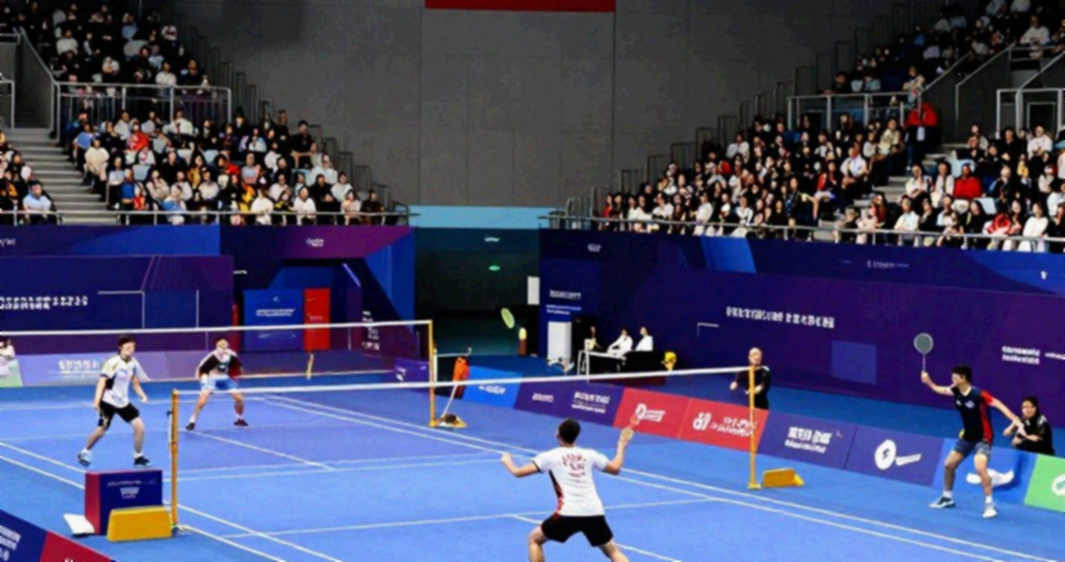
The fifth: this match offers a tactical post-mortem. It does not. There is not a single shot-level statistic in the source. All my conclusions come from the shape of the score, and the shape of the score is an interpretation, not evidence. One sample, n=1, with key metrics missing.
The sixth: her resurgence emerged from a weak first half of the season. The source gives no ranking trajectory, no results from the previous six months, no schedule density. Do not build a story out of what is not there.
The seventh: An Se Young's fourth title at this event is established fact. It is in the source, but unverified independently. Until the BWF record book is open, write it with a citation, not as a claim.
And the last, which matters most. This final should be graded with what was knowable that week, not with 2026 hindsight. That week we knew this: Sindhu was 31, she had a Super 750 title that season, she had reached the final, and across the net stood the World No. 1 against whom her record was two games in eleven. On that information this was a good result that met an expected wall. Saying afterwards that the wall was visible is easy — it was visible, but that week it did not mean the attempt should not have been made.
File what is absent, too
The source does not say what path Sindhu took to the final. Did she beat a seeded player? Who was in the quarter-final? Who in the semi-final? This is not a reporting gap; it is the largest hole in the valuation of this result. A final reached through an unseeded path carries far less signal than one reached by beating two top-8 players. That difference cannot be settled in this piece, and anyone drawing conclusions without settling it is selling a story as data.
The archive remembers what the headline chose to forget. The headline was: Sindhu lost the final. The archive will record: Sindhu took the first game off An Se Young, for only the second time in eleven meetings, and then lost 42 of the next 65 points. Both are true. The first is useful for the future. The second is more useful.
Takeaway: what to watch the next time these two meet
Three things.
First, the rally-length distribution — not the average. This match averaged 36 seconds per point, but an average tells no story. If the average across the last fifteen points of game three climbed above twenty shots, this is a capacity loss. If it stayed at 12-14 shots and Sindhu still lost, the problem is elsewhere — shot selection, perhaps, or the net — and the whole conclusion changes.
Second, Sindhu's game-three conversion rate. This is the number nobody has and the one that matters most: how many openings she builds in a deciding game and how many she finishes. If that ratio improves, 31 is not a wall. If it does not, it is a structural limit no coaching change can touch.
Third, seeding. Over the next few months Sindhu's real opponent is not An Se Young; it is the ranking table. Staying inside the top eight keeps her in the half of the draw where a final is possible. Sliding out of it puts her in front of the World No. 1 in a quarter-final, and then 21-16, 11-21, 12-21 repeats.
So the question is not whether Sindhu is good in 2026. She is, and two Super 750 results prove it. The question is whether a 31-year-old attacking player can win three games against a profile whose strength is making rallies long. Game one answered yes. Games two and three answered not yet. Both answers are filed in the same match, and the next time these two meet, watch which answer holds its ground — and which one has to pay the bill.